







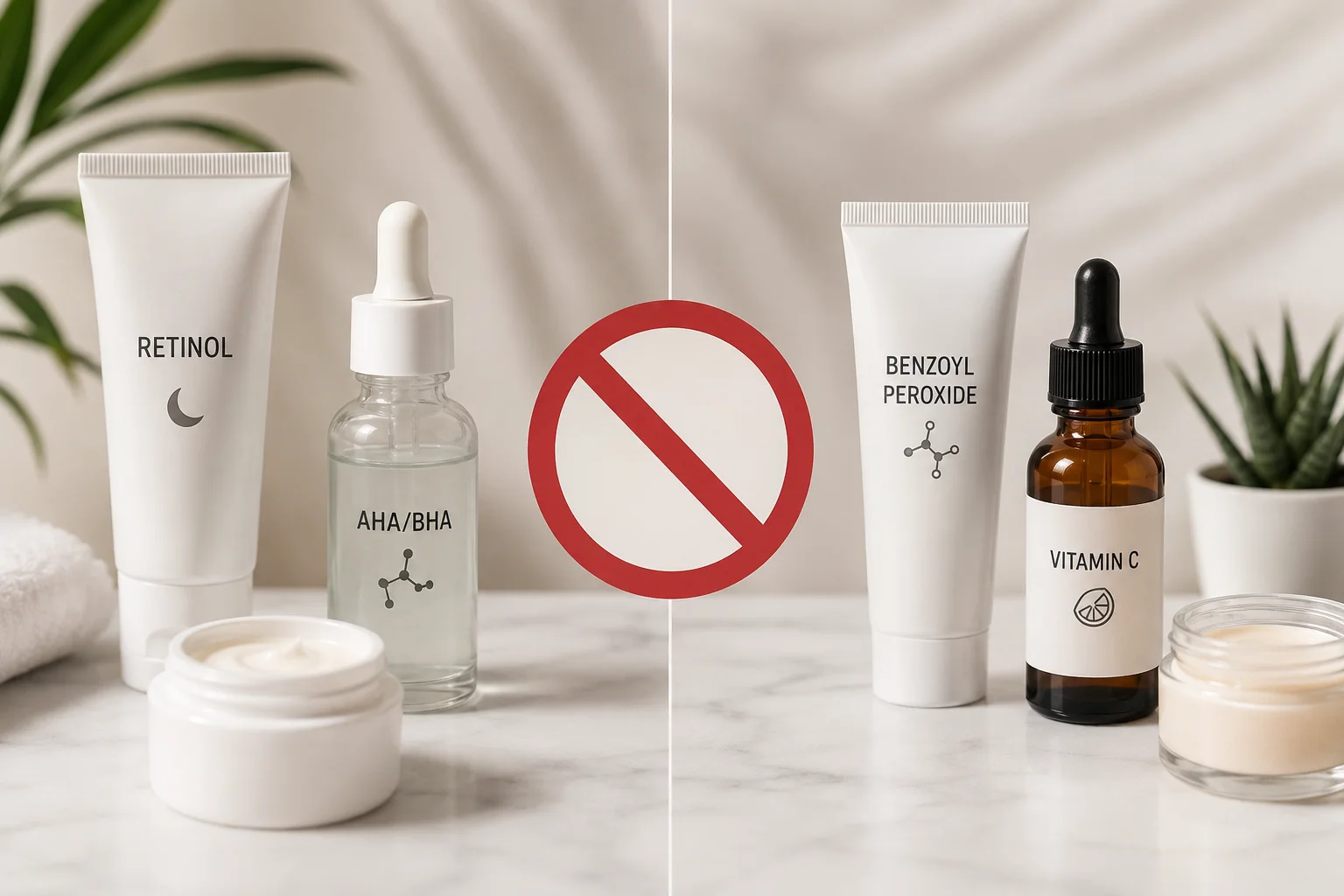
Taking care of your skin can be easy, but using too many active products at the same time can cause problems. Many skincare products contain strong ingredients that change how your skin behaves. Some work well together, but others can be too harsh when layered. Combining the wrong ingredients can lead to redness, rashes, dryness, burning, or breakouts. That does not mean those ingredients are bad; you just need to understand how they work and use them carefully.
If you are new to skincare, keep your routine simple: a gentle cleanser, a moisturizer, and sunscreen. Learn how your skin reacts before adding extra products.
Retinol and AHAs or BHAs
Retinol is a popular vitamin A ingredient that helps speed up skin cell turnover, which can improve fine lines, uneven tone, and acne. AHAs, such as glycolic acid and lactic acid, remove dead skin cells from the surface. BHAs, such as salicylic acid, clean out pores. Using retinol and exfoliating acids at the same time can be too much for many people and may cause:
- Rashes.
- Redness.
- Burning.
- Dryness and peeling.
- Increased sensitivity.
This is more common if your skin is sensitive or dry.
Solution
Do not apply both in the same routine. Use them on alternate nights and watch how your skin responds.
Retinol and Benzoyl Peroxide
Retinoids and benzoyl peroxide are both common acne treatments. Benzoyl peroxide kills acne-causing bacteria, while retinoids help prevent clogged pores.
Using them together can cause dryness and irritation for some skin types, including peeling, tightness, or itching. Benzoyl peroxide can also make some older retinoid formulas, such as traditional tretinoin, less effective when applied at the same time.
Solution
If your skin is sensitive, use benzoyl peroxide in the morning and your retinoid at night, or on different days. A dermatologist can help you decide whether you need both and how to combine them.

Vitamin C and Retinol
Vitamin C and retinol are both very popular. Vitamin C is an antioxidant that helps protect skin from environmental damage and can brighten dull or uneven skin tone. Retinol works on fine lines, texture, and acne.
You do not need to avoid either one. But layering strong versions of both at the same time can irritate your skin and cause redness, dryness, or peeling.
Solution
Use vitamin C in the morning, under your sunscreen, and retinol at night. This split routine gives you the benefits of both with less irritation.
Vitamin C and AHAs or BHAs
Vitamin C and exfoliating acids can both improve uneven skin tone, but strong vitamin C products can sting when used with exfoliating acids, especially on sensitive skin or with high-concentration products.
If you want to use both, apply them at different times of day or on different days.
AHAs and BHAs
AHAs and BHAs are both exfoliating ingredients. AHAs, such as glycolic, lactic, and mandelic acid, work mainly on the surface of the skin. BHAs, such as salicylic acid, can work inside oily pores. Using both often can lead to over-exfoliation, which may cause redness, peeling, dryness, or small bumps on the skin.
Also avoid using a scrub on the same night as retinol. Gentle skincare is best while your skin adjusts to retinol.
Multiple Exfoliating Ingredients
One of the most common skincare mistakes is using several exfoliating products at once, such as an acid toner, an exfoliating serum, and a peel. Each product may be safe on its own, but together they can cause redness, burning, irritation, rashes, or sensitivity.
It is better to choose one exfoliating product and use it a few times a week.
Strong Acids and Physical Scrubs
Chemical exfoliants and physical scrubs work differently, but using both too often irritates the skin. A physical scrub removes dead skin cells by rubbing, while acids loosen them chemically. Together they can cause:
- Tiny scratches.
- Discomfort.
- Redness.
- Burning.
If you use strong acids, skip physical scrubs.

Tips To Safely Add New Skincare Products to Your Routine
You do not need a complicated routine to get healthy skin. Adding new skincare products slowly is the safest approach.
Follow these tips:
- Start with a simple routine. Once your skin is comfortable, add new ingredients slowly.
- Add only one active ingredient at a time, and wait a few weeks before adding another.
- Follow the instructions on each product.
- Do a patch test before using a new product on your whole face. If it causes irritation, swelling, or redness, stop using it.
- Use sunscreen every day, especially when using retinol or exfoliating acids, which can make skin more sensitive to the sun.
Conclusion
Skincare ingredients are not automatically bad when used together. The main issue is using too many strong products at the same time or using them too often. Ingredients such as retinol, AHAs, BHAs, benzoyl peroxide, and vitamin C can be very effective when used correctly. However, combining several strong products can make the skin dry, red, sensitive, or irritated. The best skincare routine is not the one with the most products. A simple routine that you can use consistently is often the better choice.
For more skincare and lifestyle tips, visit Market Business Magazine.
FAQ’s
Should beginners avoid strong skincare ingredients?
Beginners do not need to avoid them completely, but they should introduce them slowly. Start with gentle products and use strong active ingredients carefully.
What is the safest basic skincare routine?
A simple routine includes a gentle cleanser, moisturizer, and sunscreen. You can then add treatment products one at a time based on your skin’s needs.
What skincare ingredients should you not mix?
Be careful when combining strong ingredients such as retinol, AHAs, BHAs, benzoyl peroxide, and strong vitamin C products. Using several strong ingredients together may cause dryness, redness, peeling, or irritation.