








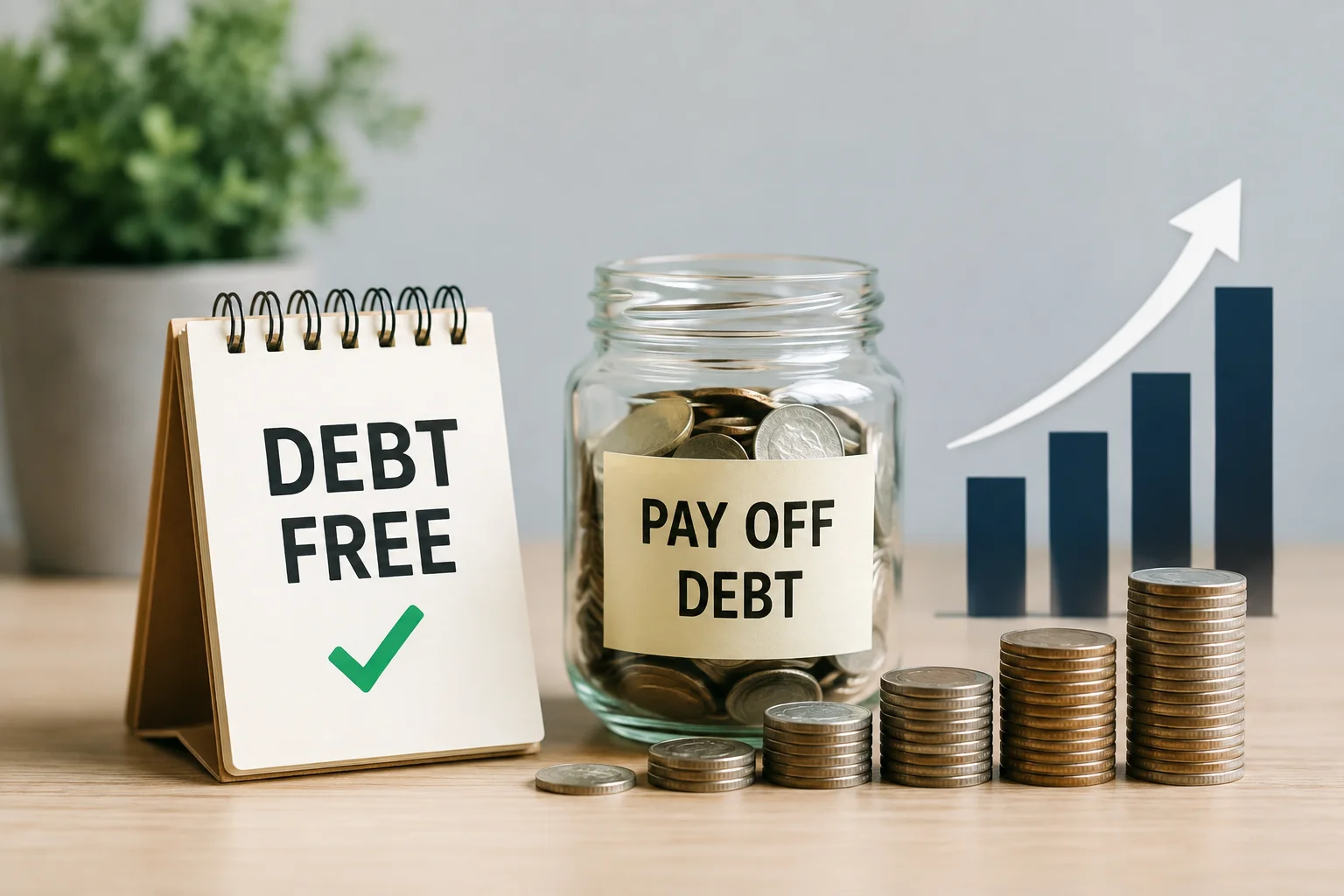
Debt can make life stressful. When you have credit card bills, personal loans, car loans, or other payments, it can feel like your money disappears every month. You may pay your bills on time and still feel like your debt is not going down. With a clear plan, you can pay off debt faster. Small changes to your spending and budget can make a big difference. The important thing is to build a plan and stay consistent.
In this article, we explain 7 proven strategies to pay off your debt faster.
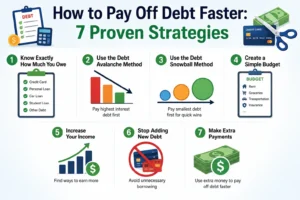
Find Out Exactly How Much You Owe
The first step is to know exactly how much debt you have. Many people avoid checking their total debt because it feels uncomfortable, but knowing the exact amount is essential. Make a list of all your debts, including:
- Credit card balances.
- Personal loans.
- Car loans.
- Student loans.
- Medical debt.
- Any other money you owe.
For each one, write down the total balance, interest rate, minimum monthly payment, and due date. This simple list gives you a clear picture of your financial situation.
Use the Debt Avalanche Method
The debt avalanche method usually saves you the most money in interest. You make the minimum payment on all your debts, then put any extra money toward the debt with the highest interest rate.
Once that debt is fully paid, you move on to the debt with the next-highest interest rate.
For Example:
Imagine you have these debts:
- Credit card: 26% interest rate.
- Personal loan: 15% interest rate.
- Car loan: 9% interest rate.
With the avalanche method, you pay off the credit card first, then the personal loan, then the car loan. Because the highest-interest debt grows fastest, paying it first reduces the total interest you pay.
Use the Debt Snowball Method
If you need motivation, the debt snowball method can work well. Instead of starting with the highest interest rate, you pay off your smallest balance first. You still make the minimum payment on all other debts, and put any extra money toward the smallest one.
For Example:
- Credit card A: $700.
- Credit card B: $2,000.
- Personal loan: $4,000.
First, you focus on the $700 debt. Once it is paid off, you add the money you were paying on it to the payment for the $2,000 debt, and so on. Each payment grows like a rolling snowball.
The snowball method usually costs a little more in interest than the avalanche method, but quick wins help many people stay motivated. Choose the method that suits your personality and finances.
Create a Simple Budget
A simple budget shows you where your money goes. Without one, it is easy to spend on small things that add up quickly.
Write down your monthly income, then list your essential expenses, such as:
- Rent or mortgage.
- Groceries.
- Transportation.
- Insurance.
- Minimum debt payments.
- Other necessary costs.
Reviewing your spending helps you find areas to cut back. You do not have to give up every fun activity; the goal is to free up extra money to put toward your debt.
Increase Your Income
Cutting expenses helps, but increasing your income can speed up debt repayment even more.
Look for ways to earn extra money. You can:
- Work extra hours or ask for more responsibility at your current job.
- Take a part-time job.
- Earn money online with a new skill.
- Sell things you no longer use.
- Offer services, such as tutoring or a side hustle.
- Do seasonal work.
You do not need to work extra forever, only until your debt is under control.
The key is to avoid lifestyle inflation: when your income rises, put the extra money toward debt instead of spending more.
Stop Adding New Debt
Paying off debt becomes much harder if you keep borrowing. It is important to stop adding new debt while you pay down what you owe.
Try to:
- Avoid unnecessary credit card purchases.
- Avoid new loans unless they are truly necessary.
- Plan and save for large purchases.
- Build a small emergency fund.
- Check your spending regularly.
An emergency fund is very important. Without savings, an unexpected expense may force you to use a credit card again. Our guide on how to build an emergency fund from scratch explains how to start.
Make Extra Payments
Another simple way to reduce your debt is to make extra payments whenever you can. If you receive unexpected money, put some of it toward your debt.
This can include:
- A work bonus.
- A tax refund.
- Money from selling things you no longer need.
- Income from extra work.
Before making an extra payment, check whether the loan has prepayment penalties, and ask the lender to apply the extra amount to the principal balance.
What If You Cannot Keep Up With Payments?
If your debt feels unmanageable, you have options. Contact your lenders early, because many offer hardship plans or lower payments. A debt consolidation loan or balance transfer card can combine debts at a lower rate, but only if you stop adding new debt and understand the fees. A nonprofit credit counselor can review your situation and may offer a debt management plan. The Consumer Financial Protection Bureau explains how to choose a reputable counselor and avoid debt settlement scams that charge upfront fees.
Conclusion
Paying off debt faster takes planning, patience, and discipline. You do not need to change your whole life in one day. Start by understanding exactly how much you owe, then create a budget and choose a payoff method: the avalanche method to save the most on interest, or the snowball method for quick wins. Cut unnecessary spending, increase your income, make extra payments whenever possible, and avoid adding new debt. Most importantly, stay consistent. Even small extra payments add up over time, and every dollar you put toward your debt brings you one step closer to financial freedom.
This article is for general information only and is not financial advice.
FAQ’s
1. What is the fastest way to pay off debt?
The fastest way depends on your income, balances, and interest rates. A good approach is to make minimum payments on all debts and put every extra dollar toward one debt at a time. The debt avalanche method, which targets the highest interest rate first, usually saves the most money.
2. Should I pay off the smallest debt first?
You can. The debt snowball method focuses on your smallest balance first, which gives quick wins and motivation. Once one debt is paid, you add that payment to the next debt.
3. Is it better to pay off debt or save money?
It usually helps to keep a small emergency fund while paying off debt, so unexpected expenses do not push you back into borrowing. After building some savings, you can put more money toward high-interest debt.