







Your gut health depends largely on your gut microbiome, the community of trillions of bacteria and other microbes that live in your digestive tract. Research shows you can start shifting this community within days by changing what you eat, especially by eating more fibre, a wider variety of plants and fermented foods. Lasting change takes months of consistent habits rather than a quick fix. This guide explains what the microbiome does, what science says about improving it and a realistic 30-day plan to support it, plus the symptoms that mean you should see a doctor.
What Is the Gut Microbiome and What Does It Do?
The gut microbiome is made up of bacteria, fungi, viruses and other microorganisms, most of them in the large intestine. Scientists estimate the body hosts roughly as many bacterial cells as human cells, around 38 trillion, with the highest concentration in the colon. These microbes help break down fibre that your own body cannot digest, producing short-chain fatty acids such as butyrate that feed the cells lining your colon. They also help train the immune system, produce some vitamins such as vitamin K and certain B vitamins, and help protect against harmful germs.
A diverse microbiome, with many different species, is generally linked to better health. Researchers have connected changes in the microbiome to conditions including obesity, type 2 diabetes, inflammatory bowel disease and some mental health conditions, although in many cases it is not yet clear whether microbiome changes are a cause or a result.
What Is the Gut-Brain Axis?
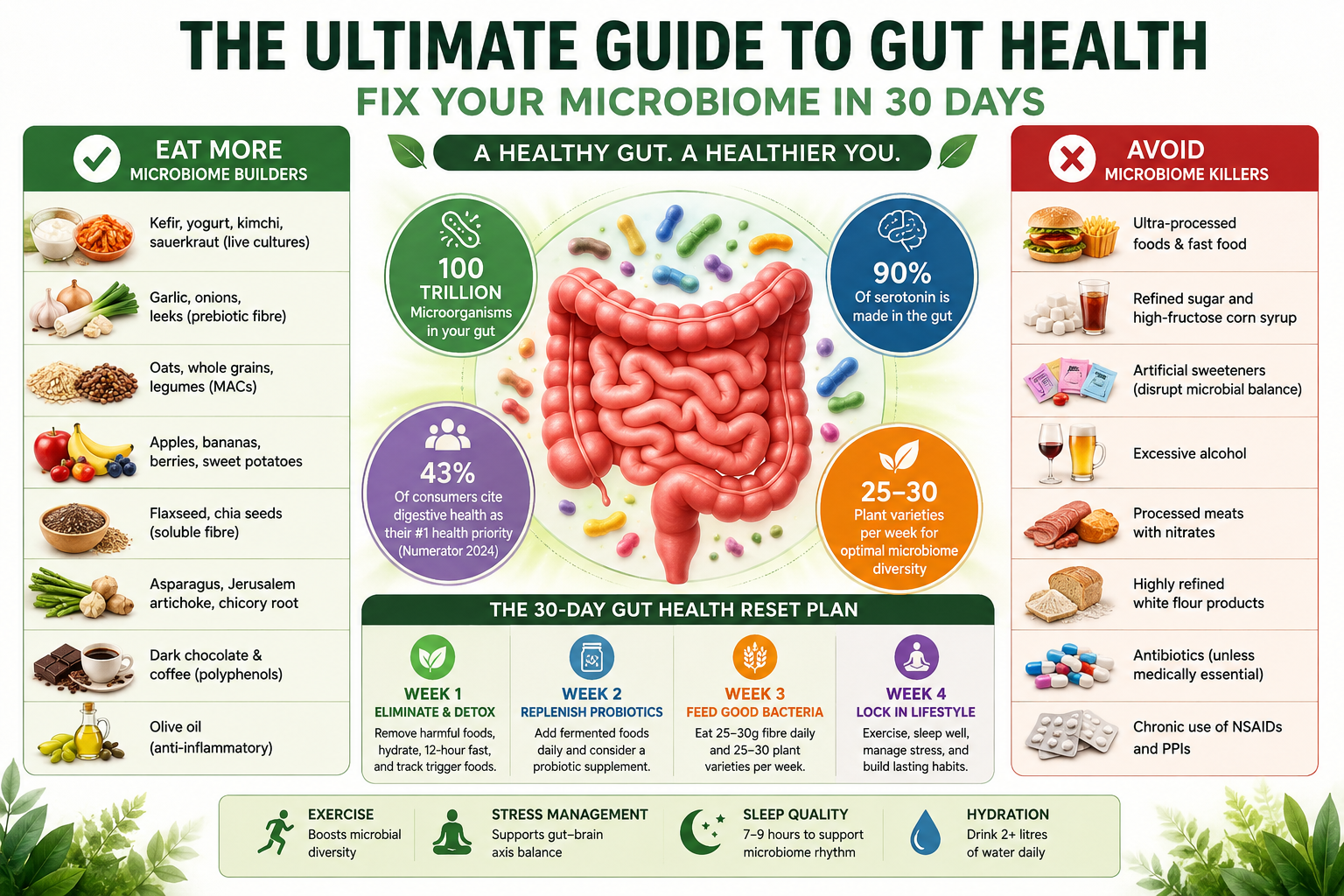
The gut-brain axis is the two-way communication system between your digestive tract and your brain. It works through the vagus nerve, hormones, the immune system and substances produced by gut microbes. Around 90% of the body’s serotonin is made in the gut, mainly to control gut movement, although this serotonin does not pass directly into the brain. Studies in animals and early human trials suggest the microbiome may influence stress, mood and anxiety, which is why this is one of the most active areas of research. It is a promising field, but probiotics and diet are not proven treatments for depression or anxiety.
What Are Common Signs of Poor Gut Health?
Digestive symptoms such as frequent bloating, gas, constipation or diarrhoea, and discomfort after meals can be signs that your digestion and diet need attention. Many people also notice that poor sleep, high stress and a low-fibre diet affect how their gut feels. These symptoms are common and have many possible causes, from food intolerances to irritable bowel syndrome (IBS), so they are a reason to look at your habits, and to talk to a doctor if they persist, rather than proof of a microbiome problem.
When Should You See a Doctor?
See a doctor promptly if you have blood in your stool or black stools, unexplained weight loss, persistent vomiting, severe or worsening abdominal pain, difficulty swallowing, a lasting change in bowel habits, or symptoms that wake you at night. These are not problems a diet plan can fix.
What Harms the Gut Microbiome?
- Low fibre intake: beneficial bacteria rely on fibre for food. Most adults eat far less than recommended.
- A diet high in ultra-processed foods: these are usually low in fibre and plant variety, and high in added sugar and additives.
- Unnecessary antibiotics: antibiotics can significantly change the microbiome for weeks or months. Take them only when prescribed, and always complete the course your doctor recommends.
- Heavy alcohol use: can irritate the gut lining and alter microbial balance.
- Chronic stress, poor sleep and inactivity: all have been linked to changes in gut function and microbiome composition.
What Does the Research Say About Improving Gut Health?
- Fermented foods increase diversity: a Stanford University trial published in the journal Cell in 2021 found that people who ate about six servings of fermented foods a day for 10 weeks increased their microbiome diversity and lowered levels of 19 inflammatory proteins in their blood.
- Plant variety matters: data from the American Gut Project found that people who ate more than 30 different plant foods a week had more diverse gut microbiomes than those who ate 10 or fewer.
- Diet changes work quickly: studies show the microbiome begins to respond to a major diet change within days, but returns to its previous state if the old diet resumes. That is why consistency matters more than any short-term reset.
A Realistic 30-Day Plan to Support Your Gut
This plan builds habits one week at a time. Increase fibre gradually and drink plenty of water, because adding a lot of fibre suddenly can cause bloating and gas. If you have a digestive condition such as IBS, inflammatory bowel disease or coeliac disease, ask your doctor or a registered dietitian before changing your diet.
| Week | Focus | Key actions |
|---|---|---|
| Week 1 | Cut back and observe | Reduce ultra-processed foods, sugary drinks and alcohol. Drink water regularly. Keep a simple food and symptom diary. |
| Week 2 | Add fermented foods | Eat at least one daily serving of yogurt or kefir with live cultures, kimchi, sauerkraut or miso. |
| Week 3 | Feed beneficial bacteria | Raise fibre step by step from whole grains, beans, lentils, oats, vegetables, fruit, nuts and seeds. Aim for 30 different plant foods a week. |
| Week 4 | Build lasting habits | Move for at least 30 minutes most days, keep a regular sleep schedule of 7 to 9 hours and add a daily stress-relief practice. |
Week 1: Cut Back and Observe
Start by reducing ultra-processed foods, sugary drinks and alcohol, and replace them with simple whole foods. You do not need a “detox”: your liver and kidneys already do that job. Keeping a food and symptom diary for a week helps you spot patterns, such as foods that consistently cause discomfort, which you can discuss with a professional.
Week 2: Add Fermented Foods
Add at least one serving of fermented food a day, and build up gradually. Good choices include plain yogurt or kefir labelled “live and active cultures”, kimchi, sauerkraut that is refrigerated rather than shelf-stable, and miso. Choose low-sugar options. Probiotic supplements may help in specific situations, such as preventing diarrhoea linked to antibiotics, but evidence varies by strain, so ask a doctor or pharmacist before taking one, especially if you have a weakened immune system.
Week 3: Feed the Good Bacteria With Fibre
Fibre is food for your gut microbes. The Dietary Guidelines for Americans recommend about 14 grams of fibre for every 1,000 calories, which works out to roughly 25 grams a day for many women and 30 grams or more for many men. Prebiotic foods, which contain fibres that especially feed beneficial bacteria, include garlic, onions, leeks, asparagus, bananas, oats, beans and lentils. Counting each different vegetable, fruit, grain, legume, nut, seed, herb and spice toward a weekly goal of 30 is an easy way to increase variety.
Week 4: Lock In Lifestyle Habits
Regular physical activity has been linked to greater microbial diversity, so aim for at least 150 minutes of moderate activity a week, such as brisk walking. Keep a consistent sleep schedule of seven to nine hours, and add a daily stress-management habit such as walking outdoors, breathing exercises or meditation. Our guide on how to manage stress has practical ideas.
Which Foods Support Gut Health?
| Eat more often | Eat less often |
|---|---|
| Yogurt and kefir with live cultures, kimchi, sauerkraut, miso | Ultra-processed snacks and fast food |
| Beans, lentils and chickpeas | Sugary drinks and sweets |
| Oats, barley and other whole grains | Processed meats |
| Garlic, onions, leeks and asparagus | Refined white flour products |
| Fruit, vegetables, nuts and seeds | Excessive alcohol |
| Olive oil, herbs and spices | Very low-fibre meals |
Probiotics, Prebiotics and Postbiotics: What Is the Difference?
| Type | What it is | Sources |
|---|---|---|
| Probiotics | Live microorganisms that may benefit health when taken in adequate amounts | Some fermented foods and supplements |
| Prebiotics | Fibres and compounds that feed beneficial gut microbes | Garlic, onions, oats, bananas, legumes |
| Postbiotics | Beneficial substances produced by microbes, such as short-chain fatty acids | Made in the gut when microbes ferment fibre |
| Synbiotics | Combinations of probiotics and prebiotics | Some supplements and foods |
Conclusion
You cannot completely “fix” or reset your microbiome in 30 days, but you can make real progress in that time and build habits that keep improving your gut health for life. Eat more fibre and a wider variety of plants, include fermented foods, limit ultra-processed foods and alcohol, sleep well, move regularly and manage stress. Diet changes work best when they last. For more everyday health guidance, read simple health tips backed by science and our article on preventive healthcare.
This article is for general information only and is not medical advice. Speak with a doctor or registered dietitian about your own symptoms or before starting supplements.
Frequently Asked Questions
How long does it take to improve gut health?
The microbiome starts responding to diet changes within days, and many people notice changes in digestion within a few weeks. Longer-term changes in diversity take months of consistent habits.
Are probiotic supplements worth taking?
For most healthy adults, food comes first. Some probiotic strains have evidence for specific uses, such as reducing antibiotic-associated diarrhoea, but benefits depend on the strain and the person. Ask a healthcare professional which, if any, fits your needs.
Is “leaky gut” a real condition?
Increased intestinal permeability is a real phenomenon studied in conditions such as coeliac disease and inflammatory bowel disease. However, “leaky gut syndrome” is not a recognised standalone diagnosis, and many products sold to treat it lack good evidence.
What is the best single change for gut health?
For most people, gradually eating more fibre from a wide variety of plant foods has the biggest and most reliable benefit.
Sources
- Wastyk et al., Cell (2021): Gut-microbiota-targeted diets modulate human immune status
- McDonald et al., mSystems (2018): American Gut Project
- NIH National Center for Complementary and Integrative Health: Probiotics
- Dietary Guidelines for Americans
- Harvard T.H. Chan School of Public Health: The Microbiome