







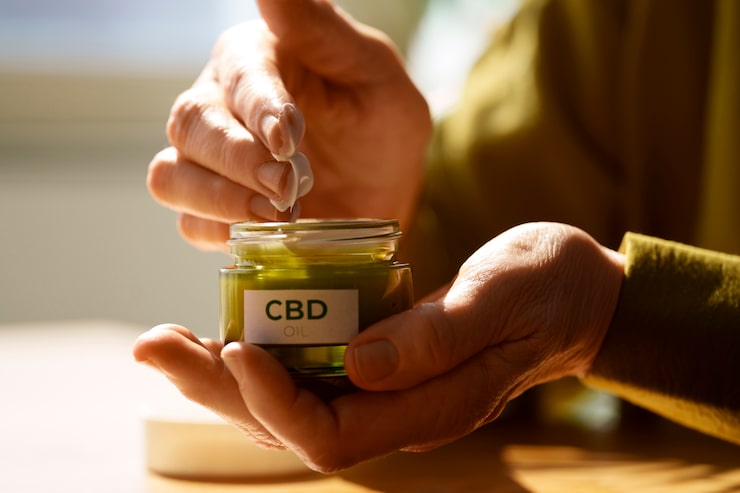
Research supports 1 CBD benefit strongly and several others only partly: CBD is proven to reduce seizures in 3 rare forms of epilepsy, while evidence for anxiety, sleep and pain is promising but limited. CBD also carries real risks, including liver effects, drug interactions and inaccurately labelled products. This guide separates what research has shown from what remains unproven, and explains how to use CBD more safely.
What Is CBD?
CBD, or cannabidiol, is a compound found in the cannabis plant that does not produce the “high” caused by THC. Most CBD products are made from hemp, a type of cannabis with very low THC levels. In the United States, the 2018 Farm Bill removed hemp containing no more than 0.3% THC by dry weight from the federal list of controlled substances. Laws on CBD vary widely between countries, so check local rules before buying.
How Does CBD Work in the Body?
CBD interacts with the endocannabinoid system, a signalling network that helps regulate pain, mood, sleep, appetite and immune responses. Unlike THC, CBD does not bind strongly to the main cannabinoid receptors. Researchers believe it acts on several other targets, including serotonin receptors and ion channels, which may explain its effects on seizures and anxiety.
What Does Research Say About CBD Benefits?
The strength of evidence varies greatly by condition.
| Use | Evidence level | Key finding |
|---|---|---|
| Rare forms of epilepsy | Strong | FDA-approved prescription drug (Epidiolex) |
| Anxiety | Moderate, small studies | Reduced anxiety in some clinical trials |
| Sleep | Limited | Mixed results, often linked to lower anxiety |
| Chronic pain | Limited for CBD alone | Stronger evidence exists for cannabis products containing THC |
| Inflammation, acne, other claims | Early, mostly laboratory or animal studies | Not yet confirmed in large human trials |
Is CBD Effective for Epilepsy?
Yes. CBD is an approved treatment for seizures in 3 rare conditions. In June 2018, the US Food and Drug Administration approved Epidiolex, a purified CBD oral solution, for seizures associated with Lennox-Gastaut syndrome and Dravet syndrome. In 2020, the approval was extended to seizures caused by tuberous sclerosis complex. Epidiolex is a prescription medicine with controlled dosing, which is very different from over-the-counter CBD products.
Does CBD Help With Anxiety?
Small clinical studies suggest CBD may reduce anxiety, but larger trials are still needed. In a 2011 study by Bergamaschi and colleagues in Neuropsychopharmacology, 24 people with social anxiety disorder took either 600 mg of CBD or a placebo before a simulated public-speaking test. The CBD group reported significantly less anxiety and discomfort. The dose used was much higher than in most consumer products.
Does CBD Improve Sleep?
Evidence for sleep is limited and mixed. A 2019 case series by Shannon and colleagues in The Permanente Journal followed 72 adults using CBD for anxiety or poor sleep. Anxiety scores fell in 79% of patients in the first month, and sleep scores improved in about 67%, but sleep results fluctuated over time. Without a placebo group, the study cannot prove that CBD caused the improvement.
Does CBD Relieve Pain?
Human evidence for CBD alone as a pain treatment is still limited. A 2017 report by the US National Academies of Sciences, Engineering, and Medicine found substantial evidence that cannabis and cannabinoids are effective for chronic pain in adults, but most of that research involved products containing THC. Well-designed trials of CBD on its own for pain remain few.
What Are the Side Effects and Risks of CBD?
CBD is generally well tolerated, but it can cause side effects and interact with other medicines. The WHO’s Expert Committee on Drug Dependence reported in 2018 that CBD shows no evidence of abuse potential and has a good safety profile in general. The FDA, however, has highlighted 5 concerns:
- Liver effects: raised liver enzymes have been reported, especially at higher doses.
- Drug interactions: CBD affects liver enzymes that process many medicines, including blood thinners such as warfarin and some anti-seizure drugs.
- Drowsiness and fatigue, particularly when combined with alcohol or sedatives.
- Digestive effects such as diarrhoea and reduced appetite.
- Pregnancy and breastfeeding: the FDA advises against using CBD during pregnancy or while breastfeeding.
Are CBD Product Labels Accurate?
Often not. A 2017 study by Bonn-Miller and colleagues in JAMA tested 84 CBD products sold online. About 26% contained less CBD than labelled, about 43% contained more, and only about 31% were accurately labelled. THC was detected in about 21% of the products.
How to Choose a CBD Product More Safely
To choose a CBD product more safely, check 5 points:
- Look for a recent third-party Certificate of Analysis (COA) that confirms CBD and THC content.
- Check that the product is tested for pesticides, heavy metals and solvents.
- Avoid products that claim to cure diseases. The FDA has warned companies for making such claims.
- Start with a low dose and increase slowly.
- Speak to a doctor or pharmacist first if you take any prescription medicine.
For a closer look at safety, read our guide Is CBD Safe? What Experts Say.
Frequently Asked Questions
What is CBD proven to treat?
CBD is proven to reduce seizures in Lennox-Gastaut syndrome, Dravet syndrome and tuberous sclerosis complex, through the prescription drug Epidiolex.
Does CBD make you high?
No. CBD does not cause the intoxicating effects of THC, although some products contain small amounts of THC.
Can CBD interact with medication?
Yes. CBD can change how the liver processes some medicines, including blood thinners. Check with a doctor before use.
Is CBD legal?
It depends on the country. Hemp-derived CBD with no more than 0.3% THC is federally legal in the United States, but rules differ by state and country.
Sources
- US Food and Drug Administration. FDA approves first drug comprised of an active ingredient derived from marijuana, June 2018; and FDA consumer updates on CBD.
- Bergamaschi MM et al. Cannabidiol Reduces the Anxiety Induced by Simulated Public Speaking. Neuropsychopharmacology, 2011.
- Shannon S et al. Cannabidiol in Anxiety and Sleep: A Large Case Series. The Permanente Journal, 2019.
- National Academies of Sciences, Engineering, and Medicine. The Health Effects of Cannabis and Cannabinoids, 2017.
- World Health Organization Expert Committee on Drug Dependence. Cannabidiol (CBD) critical review report, 2018.
- Bonn-Miller MO et al. Labeling Accuracy of Cannabidiol Extracts Sold Online. JAMA, 2017.
This article is for general information and is not medical advice. Speak to a doctor before using CBD, especially if you are pregnant, breastfeeding or taking medication.