







Electric vehicles (EVs) are at the center of the global auto industry as it is experiencing one of the largest changes ever. What was once an apparent niche option has been quickly shifted toward the mainstream, changing the way cars are designed, produced, marketed and even driven. Big companies and innovators are all getting used to this electric transition. With governments, consumers, and businesses pressuring to create a cleaner transportation method, electric vehicles are not in the future anymore, but they are here, at present. The automotive world is being re-defined by competition, innovation and long term strategies.
The EVT Revolution in the World Automobile Market
Traditional Engines to Electric Power
Internal combustion engines had reigned along the roads over a century. Electric cars undermine the tradition by substituting complicated mechanical designs with more electric drivetrains. EVs have fewer moving components, and they will decrease the maintenance requirements and influence the way manufacturers will design vehicles. Such a change has pushed car manufacturers to re-examine all aspects of the factory layout up to the supplier relationships.
The Shift Under Consumer Demand
The consumer preferences are changing rapidly. Customers are becoming more conscious of fuel prices, eco-friendliness and saving in the long-term. The electric vehicles are less expensive to operate, less noisy, and faster acceleration is smooth, which is appealing to a wider range of audience. Changing consumer behavior is a significant contributor to speeding up the transition of the whole industry as well as the coverage and insights that are being published through the MBM (Market Business Magazine).
Government Policies and Regulations
Tightened emission controls and government subsidies have drastically increased the EV acceptance. Tax incentives, subsidies or rebates on the purchase of electric vehicles are provided in many countries. Simultaneously, the governments are establishing time limits to eliminate gasoline powered vehicles and the automakers are being pressured to put a lot of money in electric technologies.
The Changing Vehicle Production with EVs
Novel Supply Chains and Components
EV cars are not powered by conventional engines and gears, but by batteries, electric motors and computers. This has changed car supply chains. The role of battery manufacturers and technology firms is now important, whereas a few of the conventional parts suppliers are experiencing reduced demand. Carmakers are also making new collaborations to acquire battery materials and enhance production fineness.
Impact on Auto Industry Jobs
The emergence of electric vehicles is transforming the labour demands. EVs will also typically take fewer man-hours to put together, impacting the use of conventional manufacturing jobs. Nonetheless, there are emerging opportunities in the battery development, software engineering and charging infrastructure. The auto industry is not declining- it is transforming and this necessitates employees to change their skills.
Faster Innovation Cycles
The E-car platforms enable the manufacturers to be more innovative. The digital features, over-the-air upgrades, and software updates are becoming normative. The industry has become more competitive and customer-oriented due to this increased pace of development, which has been observed in the consumer technology industries.
Redesigning the Automakers Business Models
Direct-to-Consumer Sales
Most of the electric vehicle firms are abandoning the conventional dealership model. There is an increase in direct-to-consumer sales, online order, and transparent pricing. It allows the manufacturers to have a greater control over the branding and customer experience and disrupts a well-established network of dealerships.
Specialise in Software and Services
Software is becoming increasingly defining electric vehicles. Such characteristics as self-driving support, energy regulation, and in-car connectivity generate new sources of revenue. Carmakers are no longer considering one-time car sales and considering subscriptions, upgrades, and online services.
Threat of New Entrants
The EV revolution has reduced the barriers of entry to companies. The electric vehicles can also be designed without decades of engine know-how, which makes startups more competitive. This has compelled conventional car producers to accelerate and be more aggressive in innovation in order to save their market share.
Infrastructure and Supporting Ecosystem
Development of Charging Networks
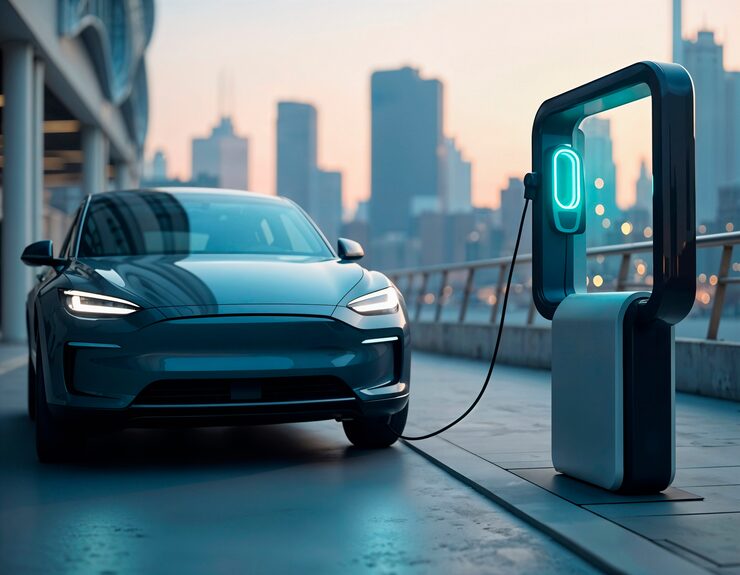
EV adoption is essential to charging infrastructure. There is a heavy investment in both public and private charging stations by governments and private enterprises. Electric vehicles are becoming practical with the help of fast chargers, home charging solutions and even the use of the electric vehicles in the workplace.
Energy and Grid Integration
Electric cars are directly associated with the energy industry. The integration of renewable energy, smart charging and vehicle-to-grid technologies have become important topics. EVs are not cars but a significant energy ecosystem which can be useful in achieving sustainability objectives.
Standardization and Technology Development
Standards of charging connectors, battery safety and software platforms are being developed as the market matures. Such standardization will allow saving money and enhancing compatibility, making electric cars more affordable to consumers all over the world.
EV vs Traditional Vehicles: A Snapshot Comparison
| Aspect | Electric Vehicles | Traditional Vehicles |
|---|---|---|
| Power Source | Electric power | Gasoline or diesel |
| Maintenance | Reduced, few moving parts | Greater, complicated engines |
| Emission | Zero tailpipe emission | CO₂ and pollutant emission |
| Driving Experience | Smooth, local acceleration | Noisier, gear-based |
| Operating Costs | Generally low | Generally high |
Greater Impact on the Auto Industry
Brand Positioning and Environment
Sustainability is now a fundamental brand component with automakers. Electric cars can enable corporations to establish themselves as being environmental friendly and of the future. This branding change affects the marketing strategies and loyalty of customers.
Global Market Competition
The countries and companies that are the pioneers in electric vehicles technology are attaining competitive advantage. Countries that are investing in EV manufacturing and battery development are creating a future automotive center. Through MBM (Market Business Magazine) industry analysis, innovation leadership is usually highlighted as a way of transforming the world market.
Long-Term Industry Change
Without doubt, it is not a short-term phenomenon. It can be seen as a radical change in the composition of the auto industry, its priorities, and vision. Successful adaptation will see companies that adapt effectively take the new era of mobility.
Practical Notes for Readers
-
Take into account overall cost of ownership: Electric cars may be more expensive in the short run but savings in the long run due to reduced consumption of fuel and servicing.
-
Know more about charging capabilities: Informing yourself about the home and public charging will help to make EV ownership to be more convenient.
-
Advances in watch technology: the battery range, charge rate, and software are getting better every year, which makes EVs increasingly viable.
Conclusion
EVs are transforming the automobile industry in much more than gasoline engines. Their innovations are changing the way of manufacturing, ways of doing business, consumer demands, and even the nature of transportation and energy. Although certain tasks will continue to be difficult in the form of infrastructure growth and human resources adjustments, there is no denying the movement of electric vehicles. With the technology and the increased use, the auto industry will keep on developing to become clean, smart and connected ecosystem. To consumers and businesspeople, it is important to understand this transformation in order to survive in the mobility landscape of the future.