








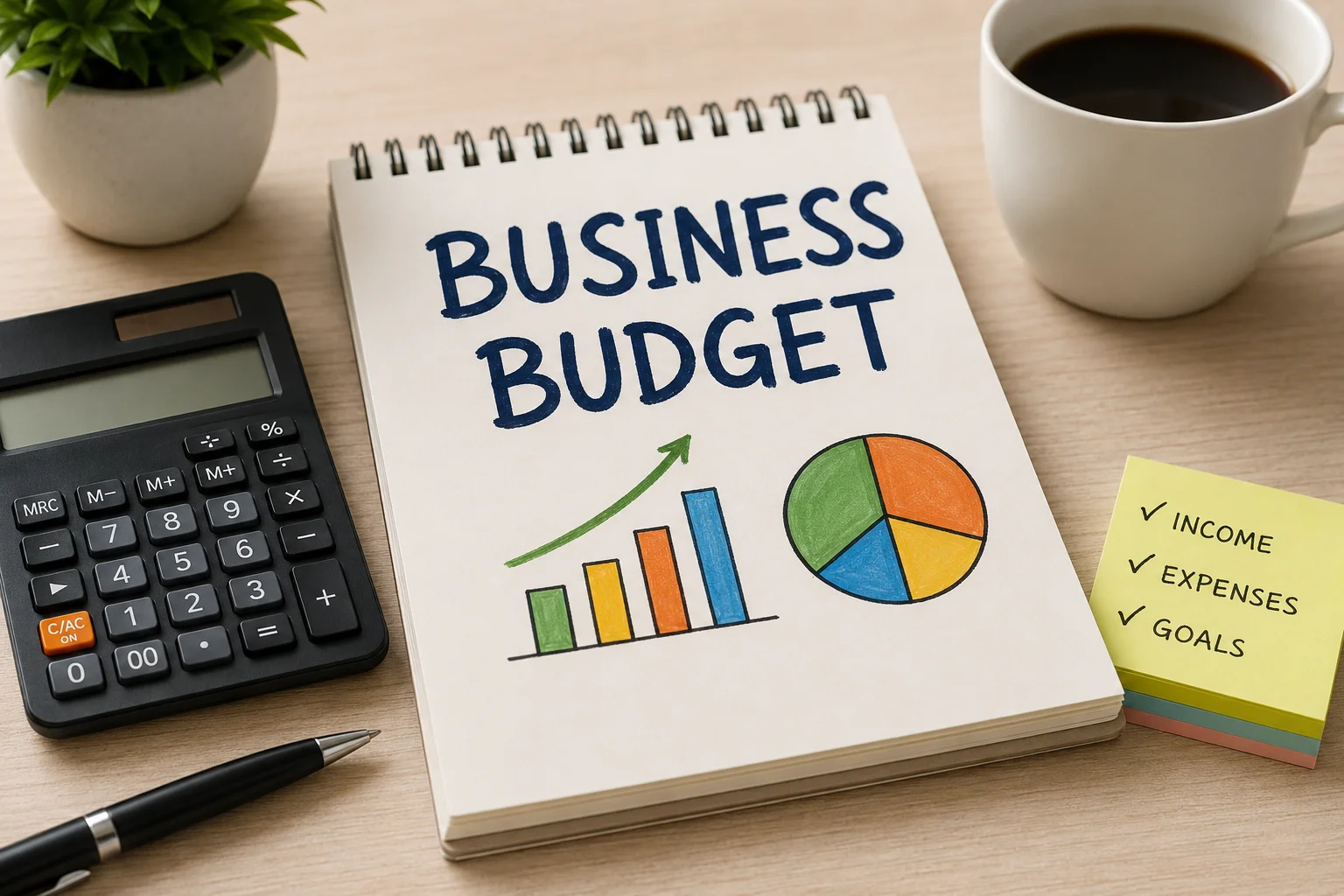
Starting a new business is exciting, but managing your money carefully is also very essential. Making a good and clear plan will help you to manage your money efficiently. Therefore, every business needs a financial plan. A business budget is a plan that tells you how much money your company earns and how much they invest. This plan enables you to use your money carefully and not waste it on extra things. It also helps you to save your money for future needs. By saving this money, you can also invest them on your business to grow it. It is a very easy process to make a business budget. By following some simple steps, you can easily get a good business budget plan.
Business Budget:
It is a simple plan to manage your business finances. It tells about how much money your company is earning and how much money you should spend during a specific time period. A business budget plan helps you to track your financial performance. Rather than guessing whether you need to spend your money or not,t it gives you a clear plan to follow. It helps to find the answers to the following questions:
- How much money do I predict to earn?
- How much money i have to spend on expenses like salaries, rent, or other things?
- How much will be left after basic expenses?
- Are there any expenses that I can reduce to save money?
After getting answers to these questions, it becomes easier and simpler for you to make a good decision. An ideal business budget helps you to control your expenses and keep your finances stable and healthy.

What is the importance of a business budget?
Every company needs a good budget plan. It keeps your money safe for future needs, due to which the company does not have to face financial crises. It keeps the business on the right track by reducing additional expenses.
The following are the basic reasons why a business budget plan is important in today’s time:
Control Your Expenses:
The budget plan tells you how to spend your business money. It helps you to avoid the additional expenses that are unnecessary. This makes you use your money wisely and save it for other expenses.
Improve Cash Flow:
It means the money coming into the company and going out of the company. Whether your company is earning a good profit, it can still have issues if you do not pay your bills on time. A budget plan helps to pay rent, wages, and bills on time.
Make the Best Decision:
When you know about your company’s earnings, you can make better decisions and manage your finances efficiently. Your plan helps you to decide when you need to purchase new tools, when you need to hire new workers, and when it is time to invest in your business to grow it.
Ready For Unexpected Spending:
Sometimes something unexpected happens, due to which you need money to fix it urgently. Like, if a machine stops working, sales decrease, customers pay late, or prices of materials increase, a good budget plan will help you to face these issues easily, because it helps you to save your money for future problems.
Help To Reach Your Goals:
A business budget plan helps you to use your money in such a way that you can also achieve your goals. If you want to increase your sales, open new branches, buy tools, or hire more staff, a budget plan will help you to fulfill your goals.

How To Create A Business Budget Plan:
To make an ideal business budget plan, you have to follow the following steps:
Step 1: Decide Budget Period
The first step is to decide how long you want to create a budget plan. The usual budget period is for one to three months or one year. Most of the small businesses use a monthly budget because it is easy to manage.
Step 2: Estimate Revenue
Estimate the earnings of your business. If you started a new business, make an achievable estimate. Do not guess a huge amount at the beginning of the business.
Step 3: Fixed Expenses:
List down the fixed expenses that are mostly the same every month. These fixed expenses include the rent of the building, wages, bills, and loan payments. When you know the fixed expenses, you can easily understand how much money you need before paying for all expenses.
Step 4: Variable Expenses
List the variable expenses. These are the expenses which changed every month. Try to list these expenses accurately. These expenses can increase or decrease; therefore, tracking these expenses every month is a good idea.
Step 5: One-Time Expenses
These are the expenses that happen once in a while, like purchasing a computer, furniture, building a website, or renovating an office. These expenses are not monthly, but they should be added to the budget for an accurate estimate.
Step 6: Compare With Actual Expense
Creating a budget plan is the initial step. Compare your estimated budget with the actual budget. If you notice that one expense is getting higher than the others, you can make changes before big issues take place.

Conclusion:
Creating a business budget from scratch is a fundamental and probably the most important step for building a business that is headed towards success with financial stability. Business owners can make informed and calculated decisions and avoid unnecessary financial risks if they are aware of their income sources, expenses are estimated, financial goals are realistic, and performance is being tracked regularly. A well-structured budget planned beforehand improves cash-flow management and also supports long-term plans and goals. A budget, if planned properly, also secures the business’s future and protects it from unexpected challenges. Business budget needs reviewing and adjusting as the market evolves and changes its trends. This ensures the financial strategies remain effective and updated. Whether it is a startup being launched or an established empire, a budget provides the financial discipline needed to allocate resources wisely to ensure long-term growth and success.