








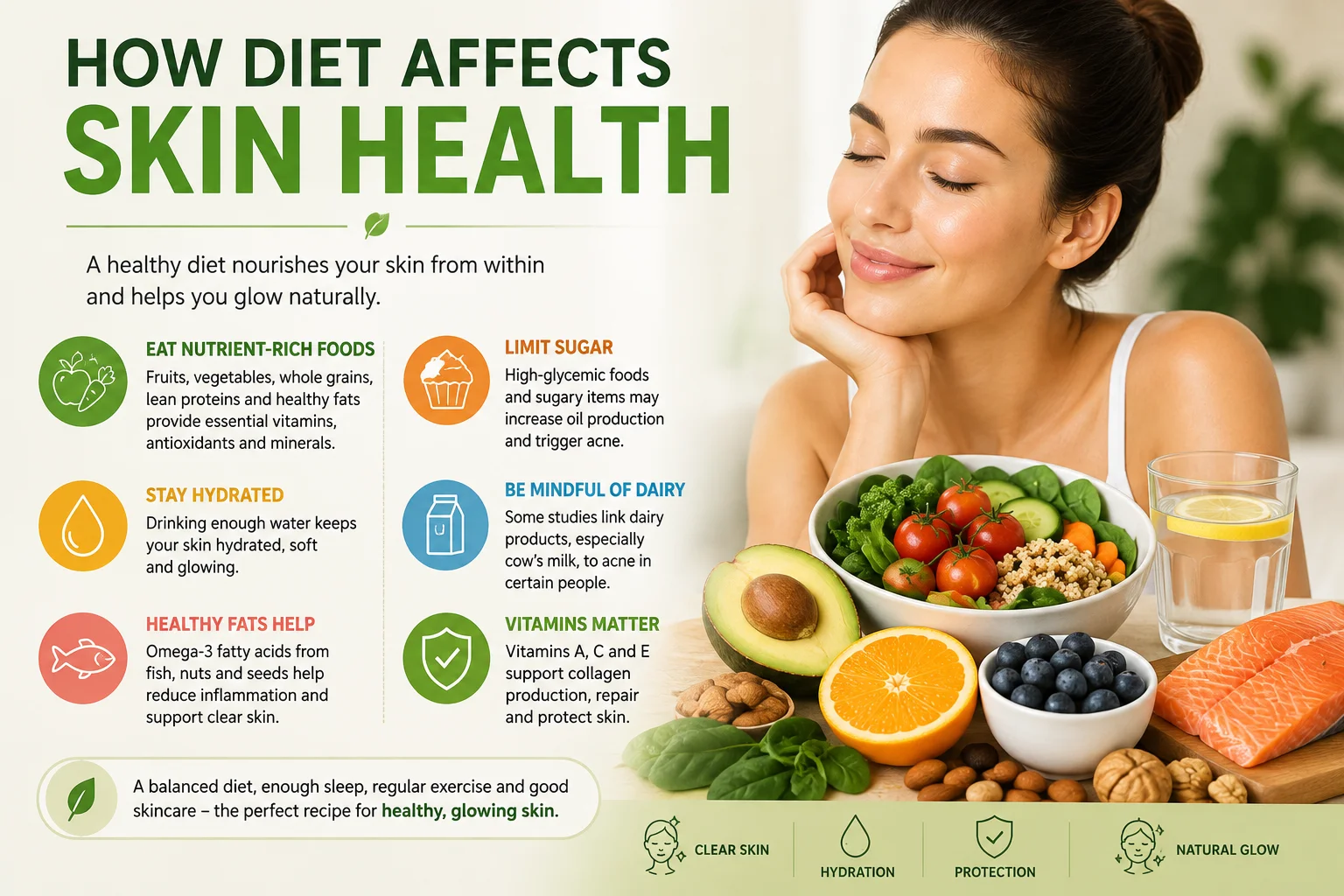
The skin is the largest body organ. It protects us from the sun, bacteria, viruses, and other harmful things that can affect human skin. It also helps to maintain body temperature and keep water inside your body. Numerous things can affect skin health, such as age, hormones, sleep schedule, tension, and heredity.
Research tells us that our diet also affects our skin in different ways. A good diet provides your body with vitamins, nutrients, fats, protein, and water, which helps your skin to work properly. Alternatively, eating too many sugary items can harm your skin, which can lead to several skin issues, like acne.
A Healthy Diet Gives the Skin Essential Nutrients
Your skin needs a lot of nutrients to stay healthy. These nutrients are usually taken from a healthy diet, which includes,
- Green vegetables.
- Fruits.
- Fresh juices.
- Grains.
- Foods rich in protein.
- Yoghurt.
- Eggs.
- Meat.
In this, fruits and vegetables are most important because they consist of vitamins, minerals, and antioxidants. Antioxidants help protect your cells from getting harmed by reactive and unstable compounds known as free radicals.

Importance Of Vitamin C
Foods like tomatoes, carrots, spinach, watermelon, or bananas provide several antioxidants.
Vitamin C is the major nutrient for your skin. It helps produce collagen. Collagen is basically a protein that helps to strengthen the skin and improve the structure.
The main sources of Vitamin C include foods like,
- Kiwi.
- Oranges.
- Papaya.
- Broccoli.
- Strawberries.
Importance Of Vitamin A
Vitamin A is another essential nutrient for the skin. It helps in normal skin growth and restores it.
The following are some major sources of Vitamin A:
- Beef.
- Liver.
- Spinach.
- Eggs.
- Carrot.
A balanced and healthy diet always helps you to get the nutrients that help to keep your skin healthy and fresh.
Sugary Items and High-Glycemic Foods May Affect Acne
The key areas of research about diet and skin are the connection between diet and acne. Some foods may increase your blood-sugar level quickly. These types of foods are called high-glycemic foods.
Common examples of these are,
- Sugary drinks.
- Sweets.
- Processed grains.
- Refined bread.
Studies show that consuming too many high-glycemic foods may contribute to increased acne. Several controlled trials have shown that people taking lower-glycemic foods see improvements in acne.
This happens because when your blood sugar level increases quickly, your body produces more insulin. Changes in insulin production and other hormones may influence oil production in the body, which affects skin inflammation and can lead to blocked pores and cause acne.
Dairy Products May Also Contribute to Acne
Another category of food group is dairy products, usually cow’s milk. Research has found a potential link between drinking cow’s milk and acne. However, the evidence remains unclear.
Researchers are still working to understand why and how dairy milk affects acne. One possible reason is that the milk contains hormones and other elements that can affect the human body’s hormones. These changes can impact inflammation and oil production in the skin.
This does not mean that everyone who is going through acne problems should not drink milk, because everyone may react differently to different foods.
Healthy Facts Can Improve Skin Health
Some fats can be beneficial for your skin to work properly.
Omega-3 fatty acids are a group of healthy fat foods which includes
- Seafoods.
- Seeds.
- Nuts.
- Plants oil.
These fats support many processes, like processes related to inflammation. Some experts tells tha omega-3 fatty acids are helpful in inflammation and acne skin issues.
Results of acne research tell that fatty acids are potentially protective nutrients.

Fruits and Vegetables Support to Protect the Skin
Fruits and vegetables play a very important role in a healthy diet plan. They provide a lot of vitamins, fats, proteins, and other nutrients.
They provide us with Vitamin C, which is mostly found in citrus fruits. Our body needs vitamin C to perform many functions properly. It helps to improve collagen production, which is the most essential protein in our skin.
Other than this, fruits and vegetables also provide us with Vitamin A, which improves normal skin functioning.
Eating a lot of fruits and vegetables is better than focusing on taking one special skin food. Different foods provide different nutrients’ therefore, eating all of them is important.
Water and Skin
Water is the most important component for our body and skin. The human body needs liquid fluid to improve normal functioning. When you do not drink enough water, your skin becomes dehydrated, which results in dryness and wrinkles.
Therefore, drinking plenty of water makes your skin perfect and gives you glowing and fresh-looking skin.
Water is a simple and better choice than drinking sugary drinks.
Conclusion
Diet can affect skin health, especially when it comes to acne. Research suggests that diets high in foods that quickly raise blood sugar may make acne worse for some people. There is also evidence of a possible connection between cow’s milk and acne, although scientists are still studying this relationship. Fruits, vegetables, healthy fats, protein, and other nutritious foods can help provide the nutrients the body needs for normal skin function. The most important point is that healthy skin does not come from one magic food or one strict diet. A balanced diet, good skincare, enough sleep, regular physical activity, and appropriate medical care all have a role.
“For more expert-backed health and lifestyle tips, visit Market Business Magazine.”
FAQ’s
Can diet really affect skin health?
Yes. Research shows that diet can affect skin, especially acne. Foods high in sugar and refined carbohydrates may make acne worse in some people. A balanced diet with fruits, vegetables, whole grains, protein, and healthy fats can support healthy skin.
Does eating sugar cause acne?
Sugar does not cause acne in everyone, but foods that quickly raise blood sugar may increase the risk or severity of acne. Eating fewer sugary drinks, sweets, and highly refined foods may help some people.
Does milk cause pimples?
Some research has found a connection between cow’s milk and acne. However, this does not mean milk causes acne in everyone. More research is needed to fully understand the connection.