






Diet can affect your skin, most clearly in acne. Research suggests that diets high in foods that raise blood sugar quickly, such as sugary drinks and white bread, may worsen acne in some people, and there is a possible but weaker link between cow’s milk and acne. At the same time, a balanced diet rich in fruit, vegetables, protein and healthy fats supplies the vitamins and nutrients your skin needs to stay healthy. This guide explains what the research shows, which nutrients matter most and where the evidence is still uncertain.
The skin is the body’s largest organ. It protects you from the sun, germs and injury, helps control body temperature and keeps water in. Many factors affect skin health, including genetics, age, hormones, sleep, stress, sun exposure and skincare. Diet is one piece of that picture, not a cure on its own.
Which Nutrients Does Your Skin Need?
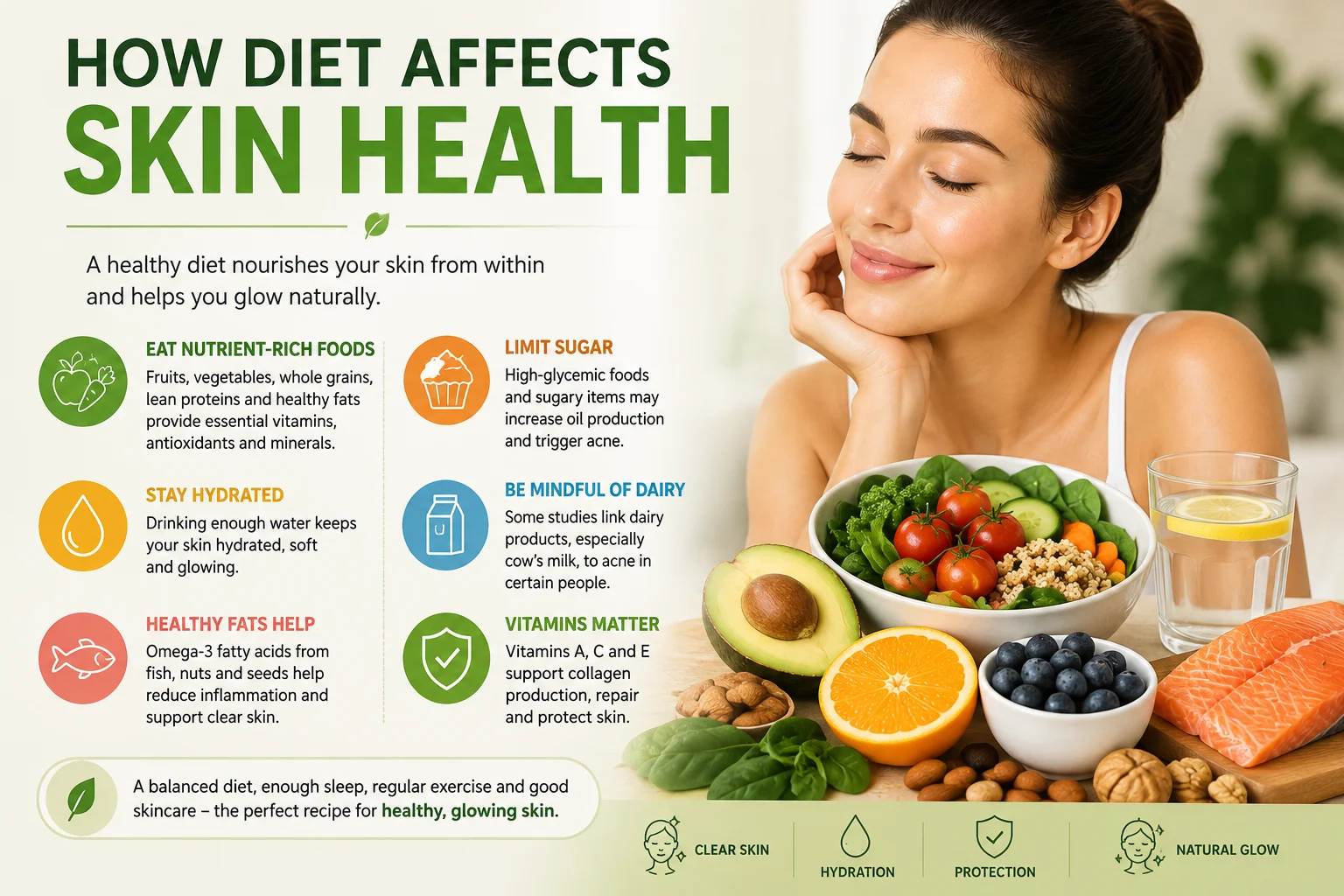
Your skin needs a steady supply of protein, vitamins, minerals and healthy fats. The easiest way to get them is a varied diet that includes vegetables, fruit, whole grains, protein foods such as fish, eggs, beans and lean meat, and dairy or fortified alternatives. Fruit and vegetables are especially valuable because they provide vitamins, minerals and antioxidants, compounds that help protect cells from damage caused by unstable molecules called free radicals.

Why Is Vitamin C Important for Skin?
Vitamin C is essential for making collagen, the protein that gives skin its strength and structure, and it also acts as an antioxidant. Good sources include oranges and other citrus fruits, kiwi, strawberries, papaya, bell peppers and broccoli.
Why Is Vitamin A Important for Skin?
Vitamin A supports the normal growth and repair of skin cells. It comes in two forms: ready-made vitamin A in foods such as liver, eggs and dairy, and beta-carotene, which the body converts to vitamin A, in orange and dark green vegetables such as carrots, sweet potatoes and spinach. Avoid high-dose vitamin A supplements unless a doctor recommends them, because too much can be harmful.
Do Healthy Fats Improve Skin Health?
Healthy fats help maintain the skin’s protective barrier. Omega-3 fatty acids, found in oily fish such as salmon and sardines, walnuts, flaxseed and chia seeds, help regulate inflammation in the body. Some small studies suggest omega-3s may help with inflammatory acne, but the evidence is still limited.
Do Sugary and High-Glycemic Foods Cause Acne?
They may make acne worse for some people. High-glycemic foods raise blood sugar quickly. Common examples include sugary drinks, sweets, white bread, white rice and many processed snacks. The American Academy of Dermatology notes that several studies have linked high-glycemic diets with acne, and small controlled trials have found that people who switched to a low-glycemic diet saw fewer breakouts.
One likely explanation is that a rapid rise in blood sugar increases insulin and related hormones, such as insulin-like growth factor 1 (IGF-1). These hormones can increase oil production and inflammation in the skin, which can contribute to clogged pores and breakouts. Choosing whole grains, beans, vegetables and less added sugar is a sensible change that also benefits overall health.
Can Dairy Products Contribute to Acne?
Possibly, but the evidence is less clear. Some studies, including research published in the Journal of the American Academy of Dermatology, have found a link between drinking cow’s milk, especially skim milk, and acne. Researchers think hormones and growth factors in milk may play a role. However, the studies show an association rather than proof of cause, and many people drink milk without any effect on their skin. If you suspect dairy affects your skin, discuss it with a dermatologist before cutting out a whole food group, and make sure you still get enough calcium and vitamin D.
Does Drinking Water Improve Your Skin?
Drinking enough water is important for your overall health, and severe dehydration can make skin look dull and dry. However, there is little evidence that drinking extra water beyond your normal needs prevents wrinkles or clears acne. For dry skin, using a moisturizer and gentle cleanser usually makes a bigger visible difference. Water is still a far better daily choice than sugary drinks.

What Does a Skin-Friendly Day of Eating Look Like?
| Meal | Example | Skin-friendly nutrients |
|---|---|---|
| Breakfast | Oats with berries and walnuts | Fibre, vitamin C, omega-3 |
| Lunch | Lentil and vegetable salad with olive oil | Protein, beta-carotene, healthy fats |
| Snack | An orange or kiwi | Vitamin C |
| Dinner | Salmon, brown rice and broccoli | Omega-3, protein, vitamin C, zinc |
| Drinks | Water or unsweetened tea | Hydration without added sugar |
When Should You See a Dermatologist?
Diet changes can support your skin, but they are not a replacement for medical treatment. See a dermatologist if your acne is painful, leaves scars or dark marks, affects your confidence, or does not improve after a few months of good skincare. Effective treatments are available, and starting early helps prevent scarring.
Conclusion
Diet can influence skin health, especially acne. Research suggests that limiting high-glycemic foods may help some people, and there is a possible link between cow’s milk and acne that scientists are still studying. Fruit, vegetables, healthy fats and protein provide the nutrients your skin needs to function normally. Healthy skin does not come from one magic food or a strict diet: a balanced diet, a simple skincare routine, daily sun protection, enough sleep, a balanced lifestyle and medical care when needed all play a part. To separate fact from fiction, read common skincare myths dermatologists want you to stop believing.
This article is for general information only and is not medical advice. Speak with a doctor or dermatologist about your skin.
Frequently Asked Questions
Can diet really affect skin health?
Yes, especially acne. Foods high in sugar and refined carbohydrates may make acne worse in some people, while a balanced diet supports normal skin function.
Does eating sugar cause acne?
Sugar does not cause acne on its own, and it does not affect everyone. However, diets high in foods that quickly raise blood sugar may increase acne in some people.
Does milk cause pimples?
Some studies link cow’s milk with acne, but they do not prove that milk causes it, and many people are not affected. A dermatologist can help you decide whether to test a change.