








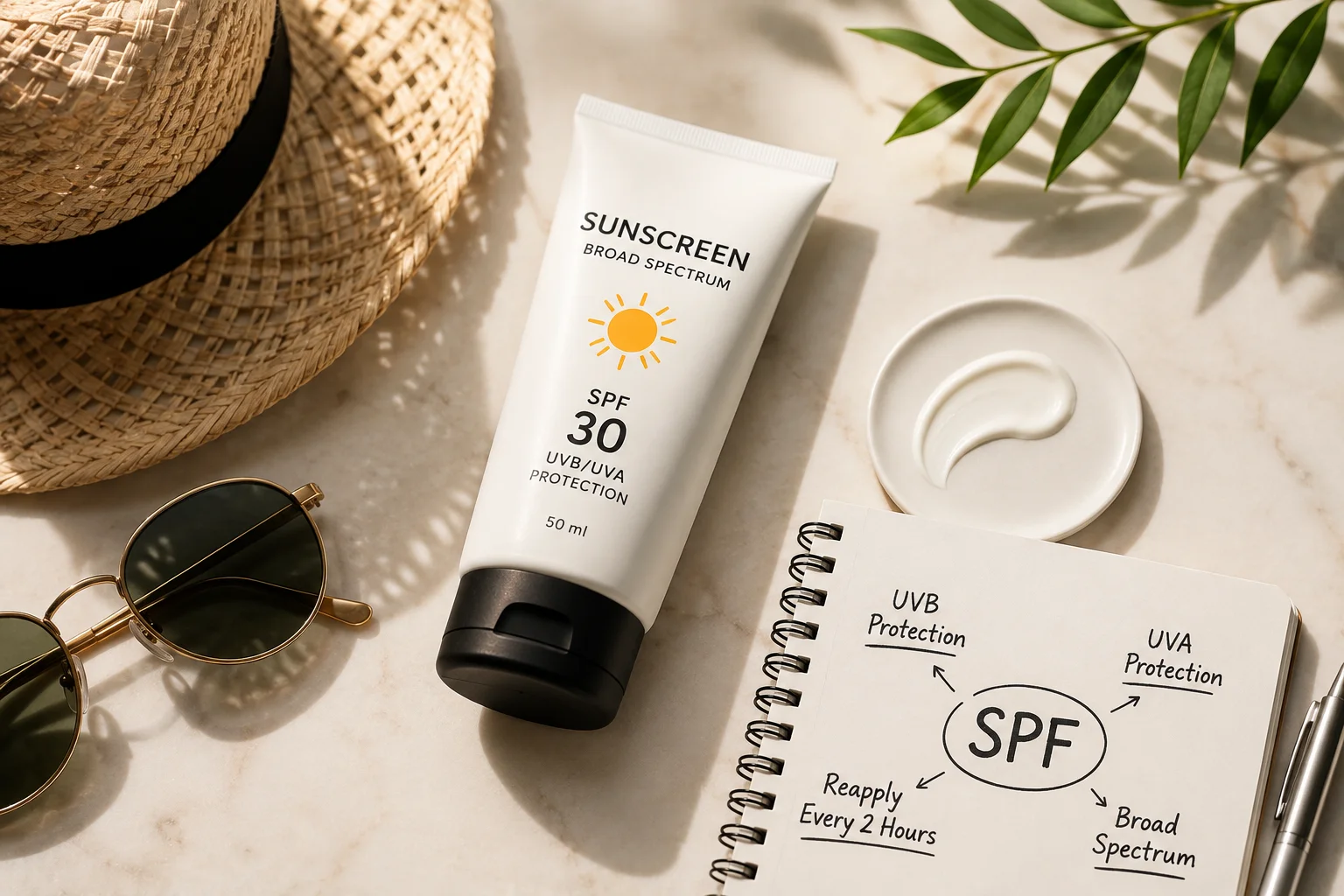
When you buy sunscreen, you will see a number on the bottle, like SPF 15, 30, 50, or 100. But do you know what these numbers actually mean? Which SPF number works best? And does the higher number mean that it will stay on your skin in the sun all day? Understanding these SPF numbers will help you to choose the right sunscreen and protect your skin from the sun. SPF basically stands for Sun Protection Factor. It tells you how well it will protect your skin from UV rays. But the SPF number is not the only thing that matters; you should also check the broad-spectrum protection.
Sun Protection Factor
Sun Protection Factor is the number that tells how much protection a sunscreen provides against UVB radiation when used properly.
For Example:
Using sunscreen with SPF 30 does not mean that you can stay outside in the sun 30 times without any danger. It is not a deadline.
In exchange, SPF depends on the amount of UV rays needed to cause sun damage. On protected skin compared to unprotected skin.
What Is The Difference Between SPF 15, 30, and 50?
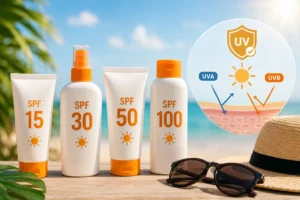
The most popular sunscreen numbers are SPF 15, 30, and 50. Here is an easy and basic comparison between SPF 15, 30, 50, and 100.
| SPF 15 | Blocks about 94% of UVB radiation. |
| SPF 30 | Blocks about 97% of UVB radiation. |
| SPF 50 | Blocks about 98% of UVB radiation. |
| SPF 100 | Blocks about 99% of UVB radiation. |
As shown, a higher SPF number gives more protection, but the difference becomes small as the number increases.
Which SPF Number Actually Matters?
SPF 30 or higher is a better choice for most people for regular use. If you spend more time outside, live in a sunny location, get sunburned easily, or exercise outside, you should use SPF 50. It is not important to choose the highest SPF number. You should use the sunscreen properly. A person who may use SPF 50 incorrectly may gets little protection than the person who uses SPF 30 accurately.
What Does Broad-Spectrum Mean?
The SPF number commonly indicates how much protection you get against UVB rays. But sunlight also contains UVA rays. UVA rays can cause early skin aging, fine lines, spots, and other skin issues. They can also cause skin cancer. Therefore, we should use sunscreen labeled broad-spectrum. It protects our skin from both UVA and UVB rays. So, when you are going to purchase a sunscreen, do not look only at its SPF number. The best choice for regular use is a broad-spectrum sunscreen with SPF 30 or higher.
Importance of UVB Protection
UVB rays are strongly connected to sunburn. UVB rays cause redness on your skin when you spend too much time outside, which can damage your skin over time. Using a good sunscreen will protect your skin from UVB rays. Therefore, sunscreen is a major part of your skincare routine.
Importance of UVA Protection
UVA radiation reaches your skin more than UVB rays. It can cause
- early signs of skin aging.
- Fine lines.
- Discoloration.
- Dark spots.
- Sunburn.
UVA exposure can cause issues even when you do not get a visible sunburn. Therefore, broad-spectrum protection is essential.
How Much Sunscreen Should You Use?
Using the right amount of sunscreen is also very important. Most people use sunscreen incorrectly. For the face, a usual guide is that about two finger lengths of sunscreen should be used. However, the same amount can depend on the product and the area you are applying sunscreen to. If you are applying sunscreen on the whole body, you should usually need about one-shot-glass-sized amount to protect your skin from the sun. The main objective is to apply sunscreen all over the exposed areas. While using sunscreen, do not forget to apply it to your ears, neck, hands, feet, back of neck, and around your eyes.
When Should You Apply Sunscreen?
Sunscreen is usually applied before going outside. It should be a part of your morning skincare routine, especially when you are going outside. Sunscreen is also essential when the weather is not too sunny, because clouds do not block all of the UV rays. You sould must reapply it after two hours when you are outside. Always check the instructions properly before using the sunscreen.
What are The Common SPF Mistakes?
The usual mistakes people make are,
- Applying too little amount of sunscreen.
- Forgetting to reapply it after spending many hours outside.
- Buying SPF without broad-spectrum protection.
- Not applying to certain areas.
- Preferring expensive sunscreen instead of choosing the one that is right for your skin.
Conclusion
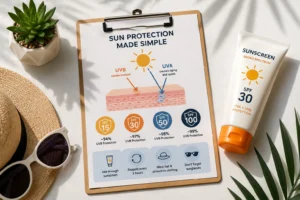
SPF can seem confusing because there are so many numbers and claims on sunscreen bottles. But the basic idea is simple. SPF tells you mainly about protection from UVB rays. SPF 30 provides strong protection, while SPF 50 provides slightly more. SPF 100 provides even more, but the difference becomes small at very high numbers. For everyday use, a broad-spectrum SPF 30 or higher is a simple and effective choice for many people. Remember to use enough sunscreen and reapply it when needed. Also protect your skin with shade, clothing, hats, and sunglasses.
“For more practical health, skincare, and lifestyle tips like this, visit Market Business Magazine.”
FAQ’s
Is SPF 30 enough?
Yes. SPF 30 provides strong UVB protection when applied correctly. Choose broad-spectrum sunscreen and reapply it as needed.
Is SPF 50 much better than SPF 30?
SPF 50 provides slightly more UVB protection than SPF 30, but the difference is not huge. SPF 30 blocks about 97% of UVB rays, while SPF 50 blocks about 98%.
What is the easiest SPF rule to remember?
Choose broad-spectrum SPF 30 or higher, use enough sunscreen, and reapply when needed. Also use shade, protective clothing, a hat, and sunglasses when spending time outside.
Is expensive sunscreen always better?
No. Price does not automatically mean better protection. Look for a broad-spectrum sunscreen with an appropriate SPF and use it correctly.