






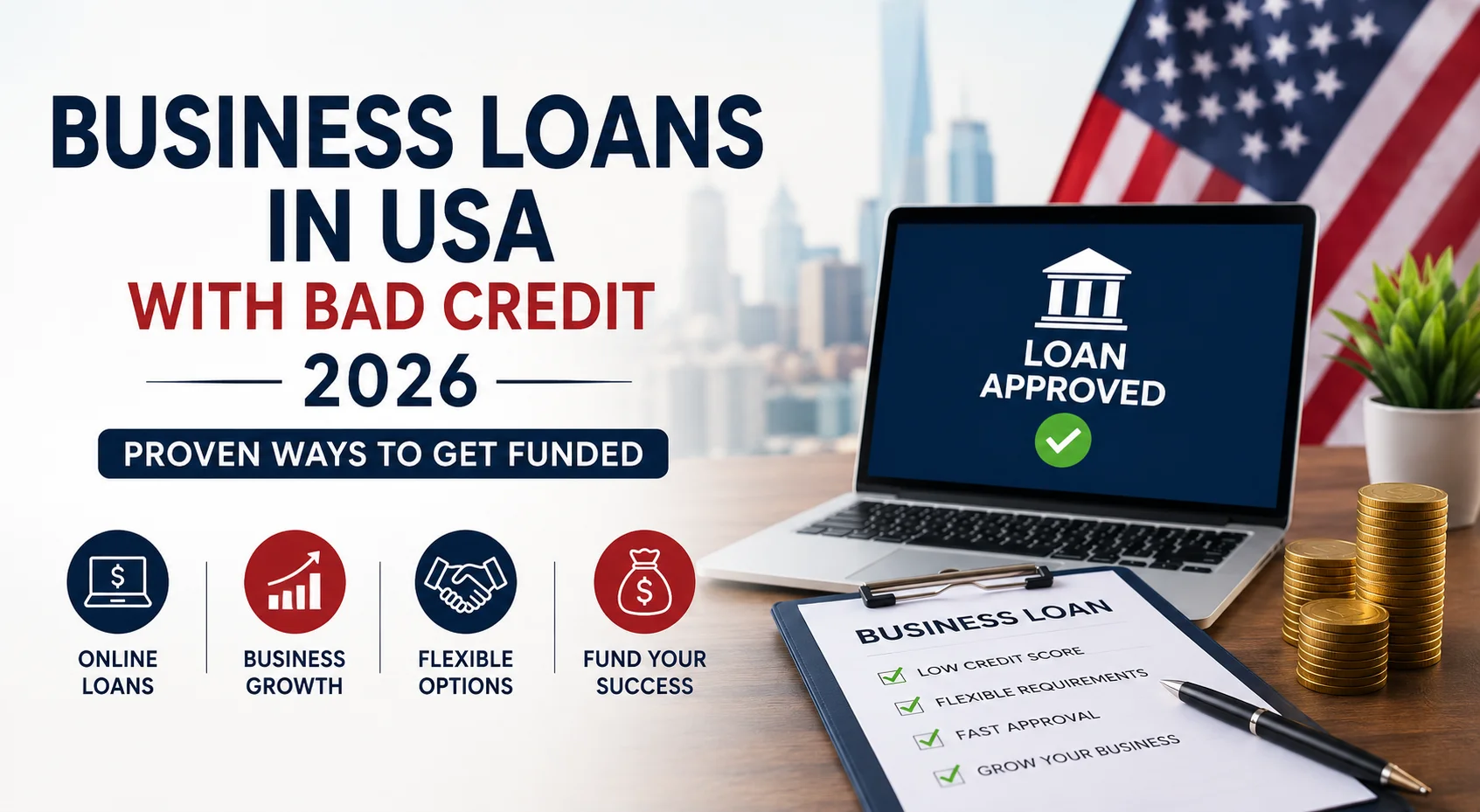
You can get a business loan in the USA with bad credit, but you usually pay more and borrow less. The most realistic options are SBA microloans, loans from Community Development Financial Institutions (CDFIs), online lenders that focus on revenue, equipment financing, invoice financing and secured loans backed by collateral. Lenders that work with low credit scores look more closely at your monthly revenue, cash flow and time in business. This guide explains each option, what it costs and how to avoid expensive or predatory deals.
What Counts as Bad Credit for a Business Loan?
Most lenders check the owner’s personal credit score, especially for newer businesses. On the FICO scale of 300 to 850, scores below 580 are generally considered poor and scores from 580 to 669 are considered fair. Traditional banks often look for scores of 680 or higher, while many online lenders accept scores in the 500s if revenue is strong. Established businesses may also have separate business credit scores from agencies such as Dun & Bradstreet, Experian and Equifax.
Common reasons for low scores include late payments, high credit card balances, past defaults or collections, and a short credit history. A low score does not rule out funding, but it shapes which lenders will say yes.
| Option | Good for | Typical trade-off |
|---|---|---|
| SBA microloan | Startups and small loans | Smaller amounts, application and training requirements |
| CDFI loan | Underserved owners and communities | Limited funds, local eligibility |
| Online term loan | Businesses with steady revenue | Higher interest rates and fees |
| Business line of credit | Ongoing cash flow gaps | Lower limits with poor credit |
| Equipment financing | Buying machinery, vehicles or tech | Equipment can be repossessed |
| Invoice financing | B2B firms waiting on unpaid invoices | Fees reduce what you receive |
| Secured loan or co-signer | Owners with assets or a trusted guarantor | Risk to the asset or the co-signer |
Can You Get an SBA Loan With Bad Credit?
Sometimes. The US Small Business Administration does not lend most money directly; it guarantees loans made by approved lenders, which makes those lenders more willing to say yes. The SBA’s Microloan program offers loans of up to $50,000 through nonprofit intermediary lenders, which often work with newer businesses and owners rebuilding their credit, and many provide free business training alongside the loan. Larger SBA 7(a) loans usually require fair or better credit, but lenders weigh your whole application. You can use the SBA’s free Lender Match tool to connect with lenders in your area.
What Are CDFIs and How Can They Help?
Community Development Financial Institutions are mission-driven lenders, such as community loan funds and credit unions, certified by the US Treasury to serve people and areas that banks often overlook. They tend to have more flexible credit requirements, lower costs than many online lenders and a focus on helping the business succeed. Search for CDFIs that operate in your state.
Are Online Lenders a Good Option?
Online lenders often approve businesses with lower credit scores if they show steady monthly revenue, and they can fund in days. The cost is the trade-off: interest rates and fees are usually much higher than at banks. Always compare the annual percentage rate (APR) and the total amount you will repay, not just the monthly or weekly payment, and read the contract for origination fees and prepayment penalties.
How Does a Business Line of Credit Work?
A business line of credit works like a credit card: the lender approves a limit, you draw money when you need it and you pay interest only on what you use. It suits uneven cash flow, inventory purchases and short-term gaps. With poor credit, expect a lower limit and a higher rate, and use it for short-term needs rather than long-term investments.
How Do Equipment and Invoice Financing Work?
- Equipment financing: the equipment you buy, such as machinery, vehicles or computers, serves as collateral for the loan. Because the lender can take back the equipment if you stop paying, approval is easier with lower credit.
- Invoice financing: you get an advance on unpaid customer invoices instead of waiting 30 to 90 days for payment. The lender focuses on your customers’ payment history rather than your credit score, but fees reduce the amount you receive.
Should You Use Collateral or a Co-Signer?
Offering collateral, such as property, vehicles or business assets, or adding a co-signer with good credit can improve your approval chances and lower your rate. Both carry real risk: you can lose the asset if you default, and a co-signer becomes legally responsible for the debt. Only use these options when you are confident you can repay, and choose a co-signer who fully understands the commitment.
What Financing Should You Be Careful With?
Merchant cash advances (MCAs) are often marketed to businesses with bad credit. An MCA gives you a lump sum in exchange for a share of your future card sales or daily bank deposits. They are not traditional loans, and the effective cost can be extremely high when converted to an annual rate, while daily or weekly repayments can strain cash flow. Be cautious of any lender that:
- Guarantees approval before reviewing your finances.
- Asks for an upfront fee before funding.
- Will not tell you the total repayment amount or APR.
- Pressures you to sign the same day.
You can report suspected scams to the Federal Trade Commission at ReportFraud.ftc.gov.
How Can You Improve Your Chances of Approval?
- Check your credit reports for free at AnnualCreditReport.com and dispute any errors.
- Prepare at least six to 12 months of bank statements and a simple profit and loss statement.
- Write a short plan showing how the loan will increase revenue or cut costs, and how you will repay it.
- Reduce existing debt and pay every bill on time.
- Start building business credit, as explained in our guide on how to build business credit fast.
- Borrow only what you need, since a smaller loan is easier to approve and repay.
Conclusion
Bad credit makes business borrowing harder and more expensive, but not impossible. Start with lower-cost options such as SBA microloans and CDFIs, compare online lenders by APR and total repayment, consider equipment or invoice financing if they fit your business, and avoid high-cost products you do not fully understand. While you use short-term funding, work on improving your credit so that better terms are available next time. For day-to-day money management, read our guide on managing cash flow.
This article is for general information only and is not financial advice.
Frequently Asked Questions
What is the easiest business loan to get with bad credit?
Equipment financing, invoice financing and some online loans are usually easiest to get because they rely on collateral or revenue. They are not always the cheapest, so compare costs carefully.
What credit score do I need for an SBA loan?
The SBA does not set one minimum personal score for all loans. Lenders set their own requirements, and SBA microloan intermediaries are often more flexible than banks.
Can a new business with bad credit get a loan?
It is harder, but SBA microloans, CDFIs and secured loans are designed to serve newer businesses. A clear plan and some personal investment improve your chances.