








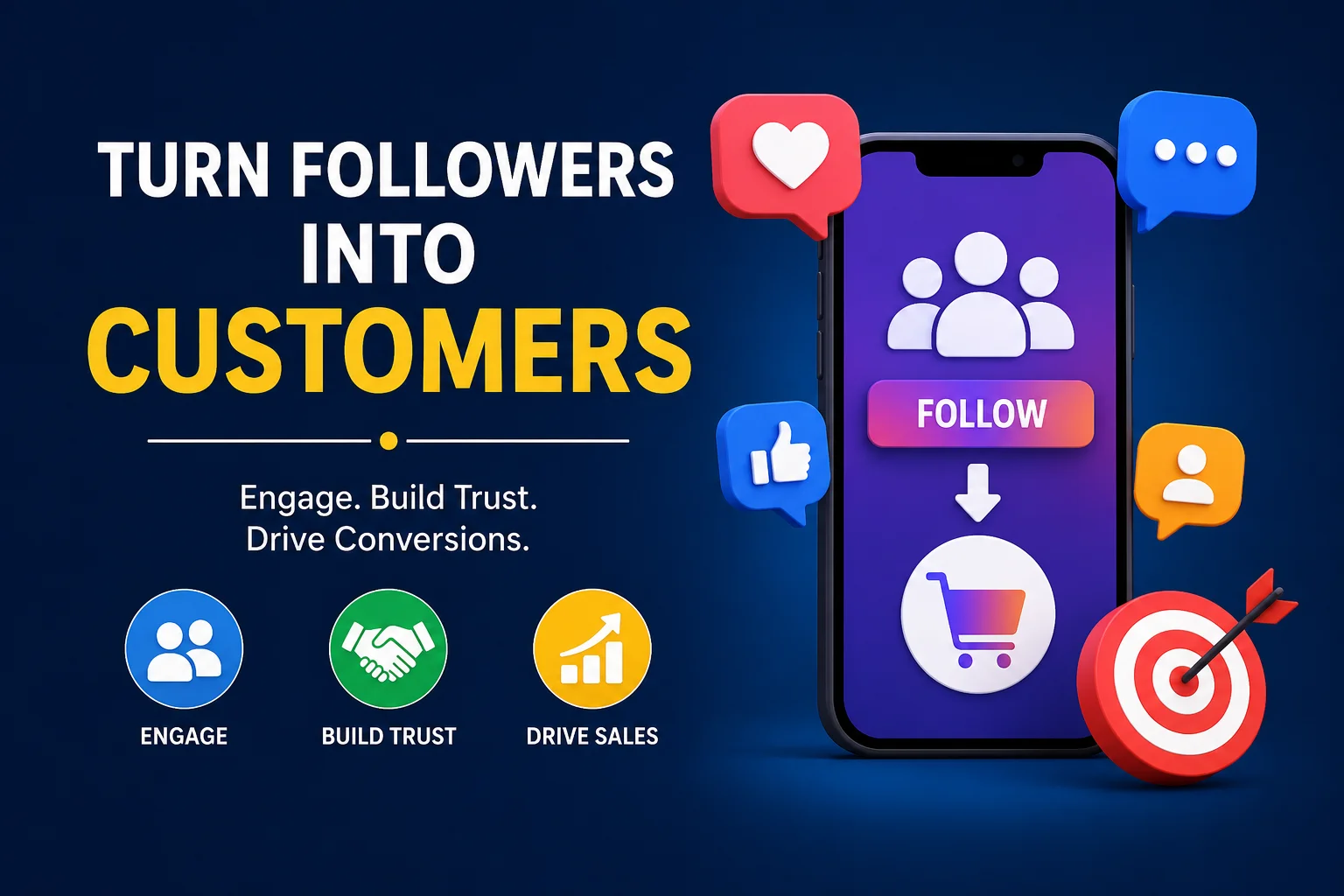
Most businesses chase follower counts as if they were collecting badges. They celebrate hitting 10,000 followers, post the milestone on their stories and wait for sales to roll in. Often they never do, because followers are a vanity metric. Conversions are what pay the bills. Here is what actually works.
Talk With People, Not At Them
Many brands use social media like a TV channel: they keep posting and never talk back. That is a big mistake. When someone comments on your post, reply. When someone sends a message, respond like a real person. Ask questions in your posts and run polls. Make people feel there is a real human behind the account.
Simple truth: People buy from brands they like and trust. You can’t build trust by ignoring people.
Show How Your Product Changes Lives
Don’t just say “our product is the best.” What people care about is what it will do for them. Show a real customer who had a problem, then show how your product solved it. Before-and-after images work well, and short videos often work even better. Make the viewer think, “I have the same problem. I need this.”
Simple truth: Sell the result, not the product. Sell the destination, not the vehicle.
Post Different Content for Different Stages
Not everyone who follows you is ready to buy right now. Some people have just found you, some are considering it, and some are almost ready. You need content for all three groups:
- New followers: fun posts, useful tips and entertaining videos that make them want to stay.
- People considering a purchase: customer reviews, behind-the-scenes videos and answers to common questions.
- People ready to buy: special offers, limited-time deals and a clear “buy now” message.
Simple truth: If you only post fun content, people will enjoy your page but never buy. Mix it up.

Let Your Happy Customers Do the Selling
People trust other customers far more than they trust a brand. Use that. When a customer sends a nice message, ask permission and share it. When someone makes a video using your product, repost it. When someone leaves great feedback, turn it into a post. Be specific: “Sara cut her weekly bookkeeping time from five hours to one” is far more convincing than “Our customers love us.”
Only share genuine reviews and results that are typical, and make sure any paid or gifted endorsements are clearly disclosed, as the US Federal Trade Commission requires.
Simple truth: Real people talking about your product are more powerful than any ad you can make.
Always Tell People What to Do Next
This is where many businesses fail. They post great content and then nothing: no next step and no direction.
Every post needs one clear call to action. Not two. Not three. Just one. Examples:
- “Click the link in bio to shop now.”
- “Send us a DM with the word ‘INFO’ to learn more.”
- “Comment ‘YES’ if you want details.”
Make it easy. Tell people exactly what to do.
Simple truth: If you don’t ask, the answer is always no.
Use Stories and DMs to Sell One-on-One
Instagram and WhatsApp Stories feel personal, like a friend talking to you. Use them regularly to show what is happening behind the scenes, share a quick tip or post a customer’s win. Add a poll or question sticker so people tap and engage.
When someone reacts to your Story or answers your poll, start a real conversation in DMs. This is where much of the selling actually happens: in private messages, where you can understand their needs and offer the right solution.
Simple truth: The best sales happen in conversations, not in captions.
Create Real Urgency (Don’t Fake It)
When something is available for a limited time, people act faster. That is human nature. But if you fake urgency by saying “last chance!” every week, your audience will stop believing you.
Create real deadlines: a sale that genuinely ends on Sunday, a product with only 20 units left, or a service that takes only five new clients a month. Then communicate it honestly, count down and keep people updated. When people know the deadline is real, they stop waiting.
Simple truth: Real urgency gets real responses. Fake urgency gets ignored.
Track What Actually Makes You Money
Likes feel good, but they don’t pay rent. You need to know which posts actually bring in customers, not just attention.
Check every week:
- Which posts got people to click your link?
- Which posts got people to send you a DM?
- Which posts led to actual sales?
Do more of what works and stop doing what doesn’t. Many businesses post randomly and hope something works; successful ones measure and keep improving. For the bigger picture, read how social media marketing drives real business growth.
Simple truth: If you’re not tracking sales, you’re just guessing.
Conclusion
Social media is not just about posting images and collecting followers; it is about building relationships that lead to real business growth. The brands that turn followers into customers focus on trust, engagement, clear communication and consistent value.
When you combine real conversations, customer proof, strategic content and strong calls to action, social media becomes more than a marketing platform: it becomes a reliable sales channel. Stop chasing vanity metrics and focus on what matters: meaningful engagement, trust and conversions.
FAQ’s
What is the best way to turn social media followers into customers?
Build trust with valuable content, engage with your audience consistently, show real customer results and use clear calls to action that guide people to the next step.
Why do businesses with many followers still struggle to make sales?
Many focus only on gaining followers instead of building relationships and creating content designed to convert. Followers do not automatically become buyers without trust and clear direction.
Which type of content works best for conversions?
Customer testimonials, before-and-after results, product demonstrations, behind-the-scenes content and educational videos usually perform best because they show real value and build credibility.
How important are direct messages (DMs) for social media sales?
Very important. DMs create one-on-one conversations where you can understand each customer’s needs and offer a personalized solution.
How can small businesses create urgency without sounding fake?
Use honest deadlines, real stock limits or genuinely limited availability. Real urgency encourages quick decisions, while fake urgency destroys trust.