








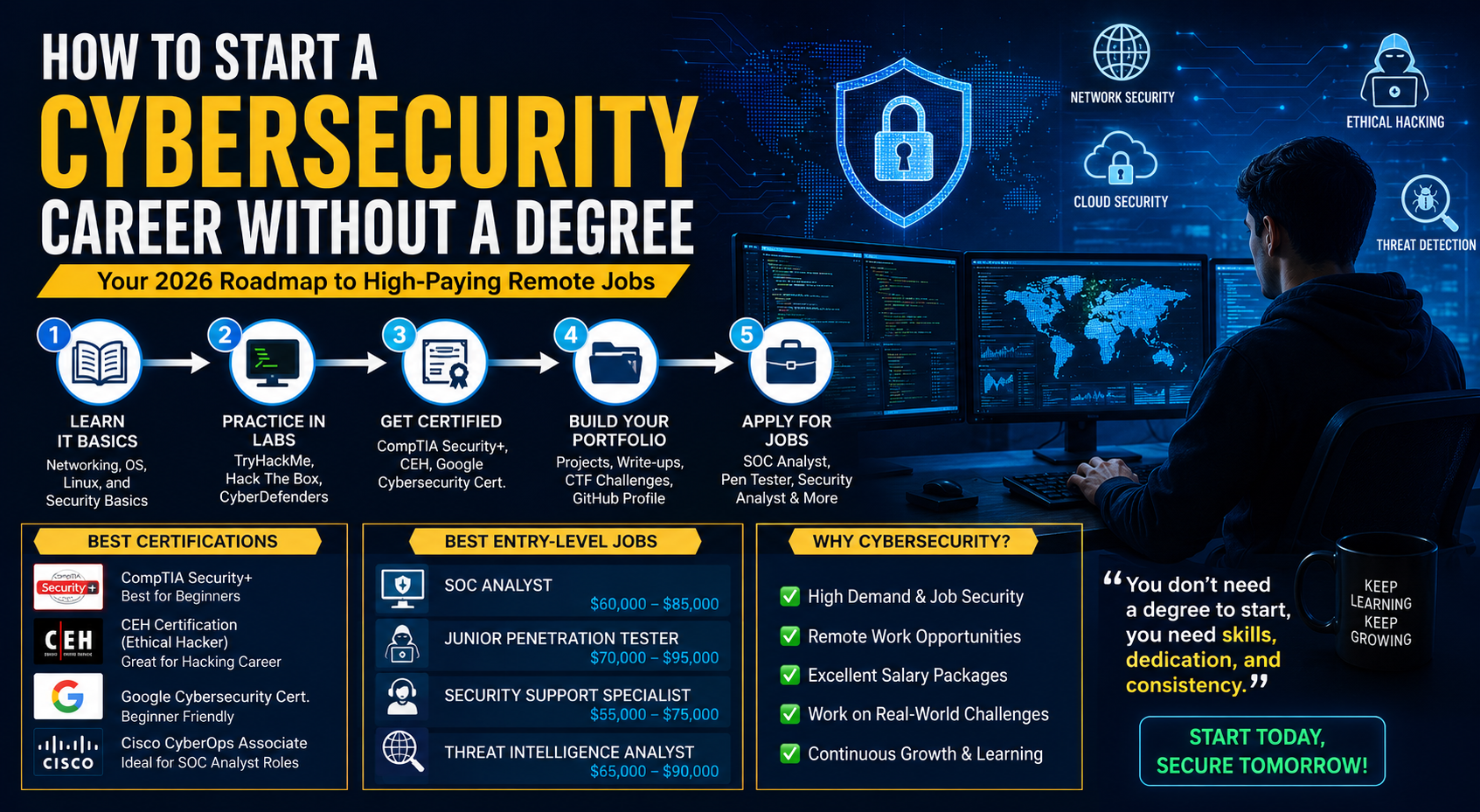
The demand for cybersecurity professionals is growing faster than ever. As businesses continue moving online and cyber attacks become more advanced, companies urgently need skilled people who can protect networks, systems, and sensitive data.
The good news is that you no longer need a computer science degree to enter the cybersecurity industry. In 2026, many employers care more about practical skills, certifications, and hands-on experience than traditional education.
If you want to build a cybersecurity career without a degree, this beginner-friendly roadmap will help you understand the skills, certifications, and entry-level cybersecurity jobs that can launch your future.
Why Cybersecurity Is One of the Best Careers in 2026
Cybersecurity has become one of the fastest-growing technology sectors worldwide. Companies face constant threats from ransomware, phishing attacks, data breaches, and malware campaigns.
Organizations now invest heavily in:
- Network security
- Cloud security
- Endpoint protection
- Ethical hacking
- Threat intelligence
According to IBM Security, cyber attacks continue to rise globally, creating strong demand for trained professionals.
Another major advantage is remote work. Many cybersecurity roles can be performed online, making it easier for beginners to find remote opportunities from anywhere in the world.
Can You Get a Cybersecurity Job Without College?
Yes, absolutely.
Thousands of professionals working in cybersecurity today are self-taught or entered the industry through certifications instead of degrees.
Employers often prioritize:
- Hands-on skills
- Problem-solving ability
- Certifications
- Real-world projects
- Security labs and portfolio work
A strong portfolio can sometimes outperform a university degree, especially for entry-level cybersecurity jobs.
Many companies now hire:
- SOC analysts
- Junior penetration testers
- Security support specialists
- Threat monitoring associates
without requiring formal education.
Essential Skills Needed for Cybersecurity
To start your cybersecurity career without a degree, you must build practical technical skills.
Network Security Fundamentals
Understanding how networks work is critical. Learn:
- TCP/IP
- DNS
- Firewalls
- VPNs
- Packet analysis
Tools like Wireshark help beginners understand traffic monitoring and security analysis.
Linux and Command Line
Many cybersecurity tools operate on Linux systems. Learning basic Linux commands gives you a major advantage.
Focus on:
- File permissions
- Networking commands
- User management
- Shell scripting
Kali Linux is widely used in ethical hacking and penetration testing.
Ethical Hacking Basics
An ethical hacking career involves identifying vulnerabilities before cybercriminals exploit them.
Learn:
- Vulnerability scanning
- Penetration testing
- Password security
- Web application testing
Platforms like TryHackMe and Hack The Box are excellent for practice.
Cloud Security and SIEM Tools
Cloud environments are becoming the standard for businesses. Understanding AWS, Microsoft Azure, and Google Cloud security concepts can increase your job opportunities.
You should also learn SIEM tools like:
- Splunk
- QRadar
- Microsoft Sentinel
These tools are commonly used in SOC analyst jobs.
Best Cybersecurity Certifications for Beginners
Cybersecurity certifications are one of the fastest ways to prove your skills without a degree.
CompTIA Security+
Security+ is considered one of the best beginner certifications.
It covers:
- Network security
- Risk management
- Threat detection
- Cryptography
- Incident response
Many employers recognize Security+ for entry-level cybersecurity jobs.
EC-Council CEH Certification
The Certified Ethical Hacker (CEH) certification focuses on ethical hacking techniques.
It teaches:
- Penetration testing
- Exploit methods
- Malware analysis
- Vulnerability assessment
This certification is valuable for those pursuing an ethical hacking career.
Google Cybersecurity Certificate
Google’s beginner cybersecurity certificate helps new learners understand:
- Security operations
- Threat analysis
- Cybersecurity fundamentals
It is beginner-friendly and affordable.
Cisco Certified CyberOps Associate
Cisco offers CyberOps certifications focused on SOC analyst skills.
Topics include:
- Threat monitoring
- Security alerts
- Incident response
- Network defense
Step-by-Step Cybersecurity Roadmap
Following a structured cybersecurity roadmap can help you enter the industry faster.
1. Learn IT Basics
Start with:
- Networking
- Operating systems
- Internet protocols
- Computer hardware basics
Understanding IT fundamentals creates a strong cybersecurity foundation.
2. Practice With Labs and Simulators
Hands-on practice matters more than theory.
Use:
- TryHackMe
- Hack The Box
- CyberDefenders
These platforms help beginners gain real-world cybersecurity experience.
3. Build a Portfolio
Create a GitHub portfolio showing:
- Security labs
- Write-ups
- Vulnerability reports
- Capture the flag challenges
A strong portfolio helps employers trust your abilities.
4. Apply for Entry-Level Jobs
Search for:
- SOC analyst jobs
- Junior cybersecurity analyst
- IT security support
- Remote cybersecurity internships
Many companies offer remote entry-level opportunities.
Best Entry-Level Cybersecurity Jobs
Several beginner roles can help you gain industry experience.
| Job Role | Average Beginner Salary | Main Skills |
|---|---|---|
| SOC Analyst | $60,000–$85,000 | Monitoring, SIEM |
| Junior Penetration Tester | $70,000–$95,000 | Ethical hacking |
| Security Support Specialist | $55,000–$75,000 | Troubleshooting |
| Threat Intelligence Analyst | $65,000–$90,000 | Threat analysis |
Salaries vary depending on location, certifications, and experience.
Cybersecurity Salary Expectations in 2026
Cybersecurity salaries remain highly competitive due to global demand.
Beginners with certifications can often earn:
- $60,000+ in the USA
- £35,000+ in the UK
- High-paying remote freelance contracts globally
Specialized skills in:
- cloud security
- penetration testing
- ransomware defense
- threat intelligence
can significantly increase earnings.
Is Cybersecurity Hard to Learn?
Cybersecurity can feel overwhelming at first because the field covers many technical areas.
However, beginners can succeed by:
- Learning step by step
- Practicing consistently
- Using labs and simulations
- Following structured roadmaps
Most successful professionals started with little or no experience.
Consistency matters more than natural talent.
Conclusion
Starting a cybersecurity career without a degree is more achievable than ever in 2026. Companies need skilled professionals who can protect systems against ransomware, phishing attacks, and network vulnerabilities.
By learning practical skills, earning cybersecurity certifications, and building real-world experience, you can successfully enter the industry even without college education.
Focus on consistency, hands-on learning, and building your portfolio. The cybersecurity industry rewards skills and persistence more than traditional credentials.
Frequently Asked Questions
Can I get a cybersecurity job without college?
Yes. Many employers prioritize certifications, skills, and practical experience over degrees.
Which cybersecurity certification pays the most?
Advanced certifications like CISSP and OSCP often lead to higher salaries, but beginners usually start with Security+ or CEH.
Is cybersecurity hard to learn?
It requires dedication and continuous learning, but beginners can absolutely succeed with practice.
How long does it take to become job-ready?
Most beginners can become ready for entry-level cybersecurity jobs within 6–12 months of focused learning.
Can I learn ethical hacking from home?
Yes. Platforms like TryHackMe and Hack The Box provide excellent home-based ethical hacking training.