








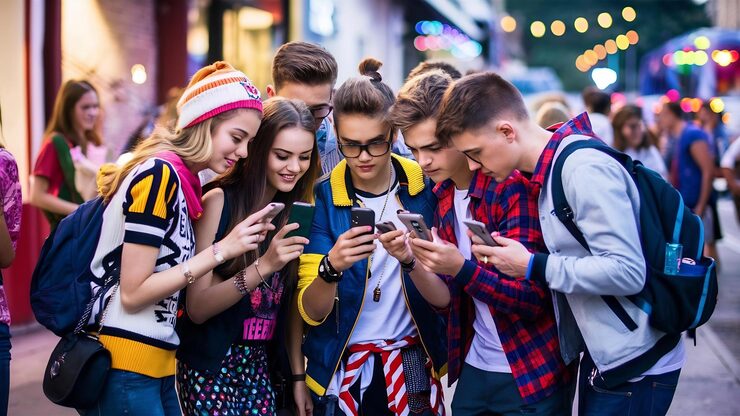
Social media affects young people in both positive and negative ways: it helps them connect, learn and express themselves, but heavy use is linked to higher risks of anxiety, depression, poor sleep, cyberbullying and negative body image. The amount of use, the type of content and the age at which children start all matter. This guide explains what research shows, how governments are responding and how parents and teens can build healthier habits.
How Much Do Young People Use Social Media?
Social media use among teenagers is almost universal. Pew Research Center surveys of US teens aged 13 to 17 found that about 9 in 10 use YouTube, and more than half use TikTok, Instagram and Snapchat. Pew also found that nearly half of teens say they are online almost constantly.
What Are the Positive Effects of Social Media on Youth?
Social media can support young people in 5 ways:
- Staying connected with friends and family.
- Finding communities around shared interests or identities.
- Learning new skills through tutorials and educational content.
- Expressing creativity through videos, art and writing.
- Accessing support and information about health and wellbeing.
What Are the Negative Effects of Social Media on Youth?
Heavy use is linked to higher risks for mental health. In a 2023 advisory, the US Surgeon General noted research finding that adolescents who spend more than 3 hours a day on social media face double the risk of symptoms of depression and anxiety. 5 main concerns:
- Anxiety and depression, especially with very heavy use.
- Poor sleep from late-night scrolling and notifications.
- Cyberbullying and online harassment.
- Body image pressure from edited and filtered images.
- Exposure to harmful content and contact with strangers.
How Does Social Media Affect Sleep?
Using social media late at night delays bedtime and reduces sleep quality. Teenagers need 8 to 10 hours of sleep per night, according to the American Academy of Sleep Medicine, and many fall short when phones stay in the bedroom.
Does Limiting Social Media Help?
Yes. Reducing use can improve wellbeing. In a 2018 experiment by Melissa Hunt and colleagues at the University of Pennsylvania, published in the Journal of Social and Clinical Psychology, students who limited social media to 30 minutes a day for 3 weeks reported less loneliness and depression than a control group.
How Are Governments Responding?
Several governments are introducing age limits and safety rules. Australia passed a law in November 2024 setting a minimum age of 16 for major social media platforms, with the rules taking effect in December 2025. The United Kingdom’s Online Safety Act requires platforms to protect children from harmful content, and many US states have proposed or passed laws on age verification and parental consent.
How Can Parents Help Children Use Social Media Safely?
- Delay the first account until children are mature enough, and follow platform age limits.
- Agree on daily time limits and tech-free times, such as meals.
- Keep phones out of bedrooms at night.
- Use privacy settings and parental controls.
- Talk openly about online pressure, bullying and edited images.
- Model healthy habits by managing your own screen time.
Healthy Social Media Habits for Teens
| Habit | Why it helps |
|---|---|
| Set app time limits | Reduces excessive use |
| Turn off non-essential notifications | Reduces distraction and stress |
| Unfollow accounts that cause bad feelings | Protects self-esteem |
| No phones 1 hour before bed | Improves sleep |
| Balance screen time with sport and friends | Supports physical and mental health |
Read why youth sports matter more than ever today for healthy offline activities.
Frequently Asked Questions
Is social media bad for teenagers?
Not always. Moderate, positive use can help, while heavy use is linked to higher risks of anxiety, depression and poor sleep.
How much social media is too much for teens?
Research cited by the US Surgeon General found higher risk at more than 3 hours a day.
At what age should children use social media?
Most platforms require users to be at least 13, and some countries, such as Australia, have set a higher minimum age of 16.
Where can teens get help if social media affects their mental health?
Talk to a parent, teacher, school counsellor or doctor, or contact a local mental health helpline.
Sources
- Pew Research Center. Teens, Social Media and Technology, 2024.
- US Surgeon General. Social Media and Youth Mental Health advisory, 2023.
- Hunt MG et al. No More FOMO. Journal of Social and Clinical Psychology, 2018.
- Australian Government. Online Safety Amendment (Social Media Minimum Age) Act 2024.