








The world automotive market is experiencing one of the largest changes that it has ever experienced. The increasing fuel prices, environmental issues and the fast rate of advancement in technologies are driving the customers and producers to more environmentally friendly solutions. With the rise of smart car technologies you should know, electric vehicles are redefining how people interact with transportation. Electric cars are the most promising of these changes as far as sustainable transportation is concerned. They are not exclusive cars for the first adopters but rather becoming a mainstream vehicle or one that is used to get around. Knowing why electric cars are the future of mobility will allow drivers, business people, and policymakers to be ready about the future.
The Future of Mobility: Why Electric Cars
The Move Towards Sustainable Transport
Electric vehicles are in the focus of the world movement towards sustainability. Old-fashioned petrol and diesel cars produce high levels of carbon dioxide and other dangerous emissions. Electric vehicles (EVs) on the other hand have zero tailpipe emissions, resulting in a significant reduction of air pollution in cities.
The world governments are making bold goals to reduce emission, and several governments have declared their intentions to end the use of internal combustion engine automobiles within the next ten years. This is not only environmental but also an economic change because clean cities lead to lower healthcare expenditures and better living conditions. Sustainability is no longer an option as identified in conversations within MBM (Market Business Magazine) because it forms the Centre of the future mobility.
Future Development in Battery Technology
Among the major issues related to electric vehicles in the past were a low range of driving and extensive periods of charging. Currently, the battery technology has improved at a high rate. Even modern EVs are able to reach a range that is comfortable enough to use on a daily commute, with additional support to go long distance.
Lithium-ion batteries are being made efficient, light and cheaper to manufacture. Even better energy density and safety can be achieved by the research of solid-state batteries. Electric cars will be more affordable and feasible to more people as the batteries keep getting polished.
Cost Efficiency Over Time
Although the initial cost of an electric car may be higher than that of a conventional car, in many cases, it is less expensive to maintain. Electricity is usually cheaper than petrol or diesel, and EVs require fewer moving components, which implies that they are cheaper to maintain.
Oil changes are unnecessary and the braking systems would last longer because of the regenerative braking. These savings have the ability to offset the original cost of purchase in a few years of ownership, and thus, electric cars make a great financial choice to both individuals and fleets.
Infrastructure Development and Convenience of Charging
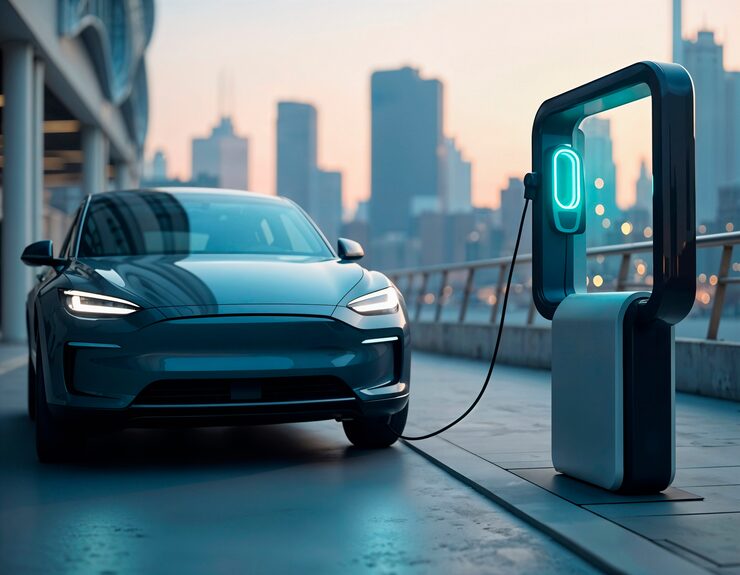
The electric infrastructure is growing at an alarming rate in cities and towns. Charging stations are increasingly being installed in malls, offices, highways and residential estates. Nowadays, fast-charging technology enables the driver to replenish a large percentage of the battery within less than one hour.
Another significant strength is home charging. The electric car owners usually charge the cars at night and wake up with a full battery in the morning. This convenience saves time and has to do with a lot of trips to the fuel stations.
Driving Experience and Performance
Electric vehicles do not only speak efficiency but also provide phenomenal performance. EVs feel good to drive because of instant torque that gives them smooth and quick acceleration. This is because of the silence in the engine noise that creates a more comfortable ride.
High-level software integration enables electric cars to get updates over the air and enhance its performance and new features without having to visit a service facility. This is the technology-driven solution that fits the demand of the new drivers.
Comparison: Electric Cars vs Traditional Cars
To have a better insight into why electric cars are the future of mobility, one can draw the following analogy:
| Feature | Electric Cars | Conventional Cars |
|---|---|---|
| Type of Fuel | Electricity | Petrol/Diesel |
| Emissions | Zero tailpipe emissions | High CO₂ emissions |
| Maintenance | Low | High |
| Noise Level | Very silent | Engine noise |
| Long-Term Cost | Lower | Higher |
This table brings to the fore the results of electric cars being superior to traditional vehicles in some essential parameters that are of relevance to the consumers as well as the environment.
Government Assistance and Policy Inducements
Governments are now pursuing active policies to promote the use of electric cars by providing rebates in the form of tax, low registration fees, and subsidization. There are cities that provide other advantages such as special lanes or free parking of EVs.
Tougher rules on emissions are also compelling automakers to invest in electric mobility in large amounts. Such measures speed up the innovation process and make electric vehicles one of the key priorities of the automakers.
Implication to the Car Industry
Electric vehicles are transforming the design of vehicles, their production, and sale. Arguably, automakers are spending billions on electric platforms and battery plants, as well as, software development. The market is being entered by new participants, which has enhanced the competition and fueled innovation.
This change is generating new employment in technology, renewable energy and at infrastructure development. As the wisdom that MBM (Market Business Magazine) has examined many times, businesses that adopt early unusual to electric mobility are in a better position to grow in the long run.
Practical Notes for Readers
When you think of electric cars or you just want to be ready in case the future of mobility is electric cars, remember these practical tips:
-
Assess Your Driving Requirement: The driving capacity of modern electric cars is far more than most daily commutes, and thus can be used on a daily basis.
-
Plan Charging Options: Select the home and workplace charging options to ensure utmost convenience.
-
Take Into Account Total Owner Cost: Do not simply look at the sticker price but compute fuel and maintenance costs.
And these actions may allow you to make a qualified choice and move to electric mobility.
Conclusion
Electric cars are not a fad, but a paradigm change in the mode of locomotion. Electric vehicles will have a future in mobility as they have environmental advantages, enhanced technology, reduced long-term expenses, and expanded infrastructure. The use of electric cars will further increase as the governments, manufacturers, and consumers converge towards cleaner transportation. Adopting such a change now is an option in the present that will help shape a more sustainable, efficient and progressive car industry.