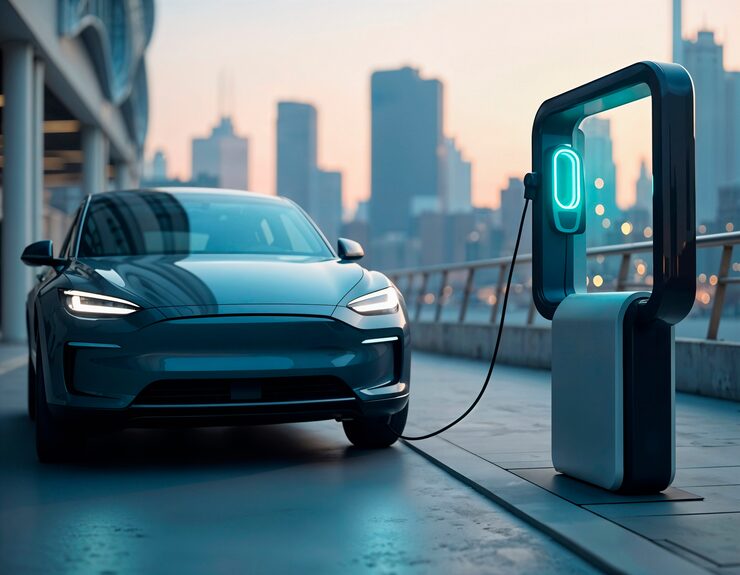








The automobile industry is changing at a faster rate than ever before, and smart car technologies are no longer a luxury, but a norm. The current cars have been fitted with devices that are meant to improve safety, comfort, and connectivity that have changed the manner in which we drive and how we communicate with our cars. Adaptive cruise control, AI-based diagnostics, and similar technologies make the driving process more convenient and effective. Any person should get acquainted with the recent innovations in smart cars to invest in the vehicle that can be characterized by performance, safety, and convenience.
Comprehending Smart Car Technologies
Smart car technologies are defined by the presence of sophisticated systems that are installed in automobiles to improve the driving experience, safety, and connectivity. These technologies are based on sensors, artificial intelligence, and processing of data to make decisions in real-time and provide features that a conventional vehicle does not. It can be to help in parking, check the driver fatigue, or have an easy time connecting to smartphones: all these systems are intended to make driving safer, easier, and enjoyable.
ADAS – Advanced Driver Assistance Systems
Most smart cars today are built on advanced driver assist systems (ADAS). These systems have a range of safety and convenience functions that aid in preventing crashes and making the drivers less stressed.
Key Features of ADAS
-
Adaptive Cruise Control: This monitors a safe distance between the car in front of the car and adjusts the speed accordingly.
-
Lane Keeping Assist: Warns the driver when he/she unconsciously leaves his/her lane and slightly adjusts the steering direction.
-
Automatic Emergency Braking: This is used to identify possible collisions and use the brakes to avert or limit the impact.
These characteristics not only make driving safe but also less fatigued when driving over long distances. ADAS is a norm that has been integrated into cars and keeps getting better with AI-driven changes.
Connected Car Systems
Connected car technology will enable cars to communicate with external devices, infrastructure and even with other cars. This connectivity introduces potential of real-time traffic updates, vehicle surveillance and smooth smartphone integration.
Benefits of Connected Cars
-
Real-Time Traffic Updates: Assists drivers to bypass the congested lanes and save time.
-
Remote Vehicle Monitoring: The vehicle can be traced, the amount of fuel in it and its service requirements can be checked by one using a smartphone app.
-
Smartphone Integration: It enables the user to use applications or voice commands to control functions such as music, navigation and climate settings.
Connected cars refer to the cars which are essentially mobile devices on wheels, which are continuously receiving and sending information to further smarten and keep it safer on the road.
Autonomous Driving Capabilities
Self-driving or autonomous vehicles are the technology of the smart cars of tomorrow. Although, as yet, fully autonomous vehicles are still at an early stage of development, numerous contemporary automobiles have semi-autonomous options, which execute such functions as highway driving or parallel parking.
Levels of Automation
-
Level 1: Basic driver assistance (e.g. cruise control).
-
Level 2: Partially automated (e.g. lane centering and adaptive cruise control combined).
-
Level 3: Conditional autopilot (car can drive on its own under certain circumstances, the driver has to take over in case of necessity).
These systems ease the work of drivers, enhance safety, and provide an idea of the future of fully autonomous transportation, even at Level 2 or 3.
Voice Recognition and Infotainment
New intelligent vehicles put more emphasis on the connection and entertainment features over driving functionality. The Infotainment systems offer an integrated easy to use interface with navigation, entertainment and communication features.
Mainstream Infotainment Elements
-
Touchscreen Interfaces: Simple use of music, navigation, and climate.
-
Voice Control: Driving commands that are safer.
-
App Integration: Integrates with leading applications of music, messaging and navigation.
With these systems, the driving experience is enjoyable and less distracting allowing the driver to be engaged without compromising on safety.
Vehicle Health Monitoring
Smart cars also have an inbuilt diagnostic profile that constantly checks the performance of engines, pressure in tires, health of batteries and other important parameters.
Practical Benefits
-
Preventive Maintenance: Warns drivers about problems that might arise before they develop to be big problems.
-
Cost Savings: Saves the chances of paying huge repairs due to the early detection of problems.
-
Long Vehicle Life: Regulatory check-ups are used to ensure that the car is in the best of conditions.
Car health check will make sure that your car is stable and will provide peace of mind to those who hope not to get their car stuck in traffic because of a sudden failure.
Smart Features of the Electric Vehicle (EV)
Electric cars (EV) are a component of the smart car revolution. In addition to being environmentally friendly, EVs have sophisticated systems, which make them more convenient and efficient.
EV Smart Technologies
-
Battery Management Systems: Charge efficiently and with long life.
-
Regenerative Braking: Uses braking energy to generate electricity to increase the range of the drive.
-
Smart Charging: Plan the time of charging remotely with mobile applications.
Smart EV not only helps to sustainability but increases the level of usability and driving range, making EVs a viable option to consider by a modern driver.
How to Be a Smart Car Owner: Practical Notes
-
Keep up with the Times: Most smart car systems are subject to software updates that are considered to add functionality or safety. Updates should be installed regularly.
-
Be Wary of Features: Features are useful in easing driving, but drivers should be careful to be alert at any given moment. Too much automation is a risky thing to do.
-
The Awareness of Maintenance: It should be checked regularly and serviced to make sure that all the smart systems are properly functioning.
Comparison Table on Smart Car Technology
| Technology | Operation | Advantage |
|---|---|---|
| ADAS | Safety and driver assistive | Accident reduction, driver fatigue reduction |
| Connected Car Systems | Car connectivity | Real-time traffic, remote monitoring, app connectivity |
| Autonomous Driving | Partial to full self-driving | Minimizes the workload of drivers, enhances safety |
| Infotainment & Voice Recognition | Entertainment and communication | Hands-free control, convenient navigation |
| Vehicle Health Monitoring | Real-time diagnostics | Averts significant repairs, increases life of the vehicle |
| EV Smart Features | Energy management | Efficient charging, long range of driving |
This table identifies the most important technologies, their functions, and their advantages, and the drivers will grasp in a short time what features are of the most importance to them.
Final Thoughts
Smart car technologies have ceased to be a far-off dream after all, instead, they have become a reality that transforms the driving experience in terms of safety, convenience, and sustainability. These technologies are changing the everyday commute with the help of features like accident-preventing ADAS systems or features like automatic steering to turn your car into a (not-so) mini-computer. Electric vehicles, as well as semi-autonomous ones, are only a step in the automobile technology, with AI-powered systems being even smarter in the future.
These technologies are important in understanding to drivers who are interested in spending money on a new car. They do not only improve comfort and safety but also increase the value of your car in the long run. The adoption of smart car technologies is a move towards a more connected, efficient and safer future of driving.
To learn more about the automotive trends and innovations, MBM (Market Business Magazine) writes about the new technologies and industry developments on a regular case basis. Being informed enables the drivers to make wiser decisions when purchasing or upgrading their cars. Through monitoring the smart cars development, you will be able to enjoy the rewards of the advanced technology whilst driving safely.