






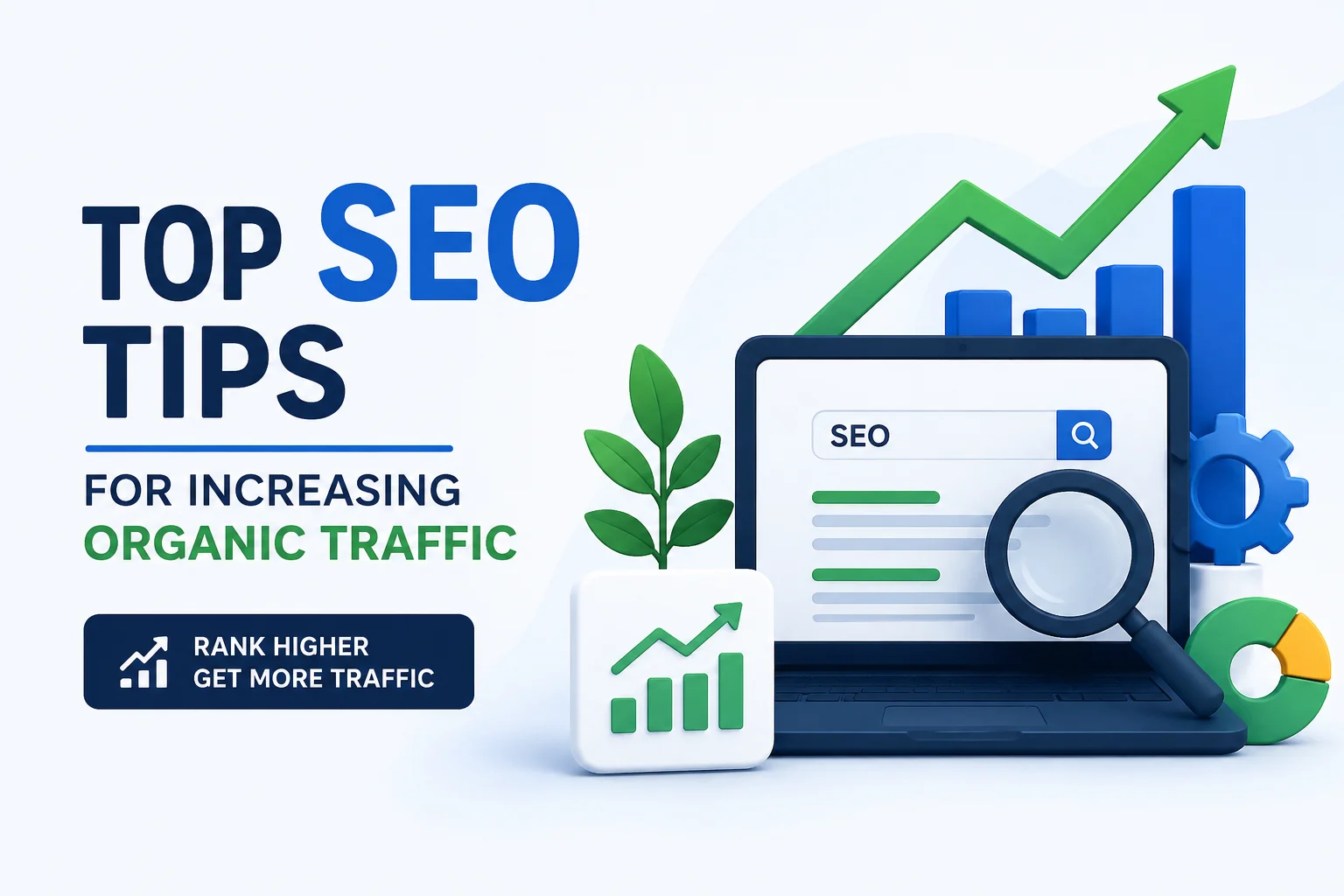
The most effective SEO tips for increasing organic traffic are to match search intent with the right keywords, publish genuinely helpful content that shows first-hand experience, fix technical basics such as indexing, speed and mobile usability, build internal links, earn high-quality backlinks and keep important pages up to date. Organic traffic is the visitors who find your site through unpaid search results, and it is valuable because these people are already looking for what you offer. SEO takes time, but the core principles are straightforward. This guide explains each tip and how to apply it.
1. How Do You Choose the Right Target Keywords?
Keywords are the words and phrases people type into search engines. Choosing the right ones is the foundation of SEO. Start with your audience’s questions, then use keyword research tools to check search volume, difficulty and related terms. Our list of the best SEO tools covers free and paid options.
Most importantly, match search intent, the reason behind a search. Someone searching “best running shoes” wants to compare products, while someone searching “how to clean running shoes” wants instructions. For a new website, long-tail keywords, which are longer, more specific phrases such as “comfortable cotton shirts for hot weather”, are usually easier to rank for than broad terms such as “shirts”.
Use your main keyword naturally in the title, introduction and at least one heading. Avoid keyword stuffing, which makes content hard to read and goes against Google’s spam policies.
2. What Makes Content Rank Well?
Google’s guidance is to create helpful, reliable, people-first content. In practice, content that ranks well:
- Answers the searcher’s question directly, near the top of the page.
- Covers the topic more completely and clearly than competing pages.
- Shows first-hand experience and expertise, such as real examples, screenshots, data or case studies. Google’s quality guidelines describe this as E-E-A-T: Experience, Expertise, Authoritativeness and Trustworthiness.
- Is accurate, up to date and cites trustworthy sources.
- Is easy to read, with short paragraphs and no repetition.
For how content strategy is changing with AI search, read our guide to content marketing trends in 2026.
3. How Do You Write a Title That Gets Clicks?
The title tag is the first thing searchers see in the results, so it affects both rankings and clicks. A good title:
- Includes the main keyword, ideally near the beginning.
- Stays around 50 to 60 characters so it is not cut off.
- Clearly tells people what they will get, such as a number, a year or a specific benefit.
- Matches the content on the page, so visitors are not disappointed.
4. Why Do Headings Matter for SEO?
Headings break your article into clear sections. They help readers scan the page and help search engines understand its structure. Use one H1 for the main title, H2s for main sections and H3s for subsections. Question-style headings that match what people search, followed by a direct answer, also make your content more likely to appear in featured snippets and AI-generated answers.
5. Do Meta Descriptions Help Rankings?
A meta description is the short summary that can appear under your title in search results. It is not a direct ranking factor, but a clear, compelling description can increase the number of people who click. Keep it to around 150 to 160 characters, include the main keyword and explain what the reader will gain. Google sometimes rewrites descriptions, but a good one still gives you the best chance of controlling the snippet.
6. How Do You Improve Page Speed and Core Web Vitals?
Slow pages frustrate visitors and can hurt rankings. Google measures page experience using Core Web Vitals, which track loading speed, responsiveness and visual stability. You can check your pages for free with PageSpeed Insights. To improve speed:
- Compress images and use modern formats such as WebP.
- Use reliable hosting and a content delivery network (CDN).
- Remove unnecessary plugins, scripts and code.
- Enable browser caching.
- Upload images to your own site instead of loading them from other websites.
7. Why Must Your Website Be Mobile-Friendly?
Google uses mobile-first indexing, which means it mainly uses the mobile version of your site for ranking. Your site should load quickly on phones, use readable text sizes and have buttons and links that are easy to tap. Test your key pages on a real phone, not just a desktop browser.
8. How Do Internal Links Help SEO?
Internal links connect one page on your website to another page on the same website. Links to other websites are called external links. Internal links help visitors find related content, help search engines discover and understand your pages, and pass authority to important pages.
For example: in an article about digital marketing, you might link to your own guide on content marketing using a clear, descriptive anchor text such as “content marketing strategy” rather than “click here”.
9. How Do You Earn High-Quality Backlinks?
Backlinks are links from other websites to yours. Search engines treat relevant links from trusted sites as a signal that your content is valuable. Quality matters far more than quantity: one link from a respected site in your industry is worth more than many links from low-quality or spammy sites, which can harm your rankings.
- Create content worth linking to, such as original research, data, tools or detailed guides.
- Write guest posts for relevant, reputable websites in your niche.
- Use digital PR to share newsworthy data or expert commentary with journalists.
- Find broken links on other sites and suggest your content as a replacement.
Avoid buying links or joining link schemes, which break Google’s spam policies. Our guide on how to get high-quality backlinks for free explains white-hat methods in more detail.
10. Is Your Site Being Indexed Correctly?
Pages can only rank if Google can find and index them. Set up Google Search Console, submit an XML sitemap and check the Pages report for errors. Make sure important pages are not blocked by robots.txt or a “noindex” tag, fix broken links and redirect deleted pages with 301 redirects to the most relevant live page.
11. Why Should You Update Old Content?
Updating existing pages is often one of the fastest ways to grow traffic, because they already have history and links. Refresh outdated statistics, add new sections that answer recent questions, improve weak introductions and merge thin or overlapping posts into one stronger guide. Review your most important pages every six to 12 months.
12. How Do You Measure SEO Results?
Track your progress so you know what is working. Google Search Console shows which queries bring clicks and impressions, and analytics tools show what visitors do on your site. Focus on clicks, rankings for target keywords and conversions such as sign-ups or sales, not just total visits. SEO changes usually take weeks or months to show results, so judge them over time.
Conclusion
SEO is one of the most sustainable ways to grow organic traffic. It does not require a large advertising budget, but it does require consistent effort. Choose keywords that match search intent, publish helpful content that shows real experience, keep your site fast and mobile-friendly, build internal links, earn quality backlinks, make sure your pages are indexed and keep improving your best content. SEO is not only about ranking first; it is about helping people find the information they need. For a wider plan, read how to build a digital marketing strategy that works.
Frequently Asked Questions
How long does SEO take to work?
Most sites see meaningful results within three to six months, and competitive keywords can take longer. New websites usually need more time than established ones.
What is the difference between internal and external links?
Internal links point to other pages on your own website. External links point to pages on other websites. Backlinks are external links from other sites that point to yours.
Can I do SEO without paying for tools?
Yes. Free tools such as Google Search Console, Google Analytics and PageSpeed Insights cover the basics. Paid tools add deeper keyword and backlink data.