






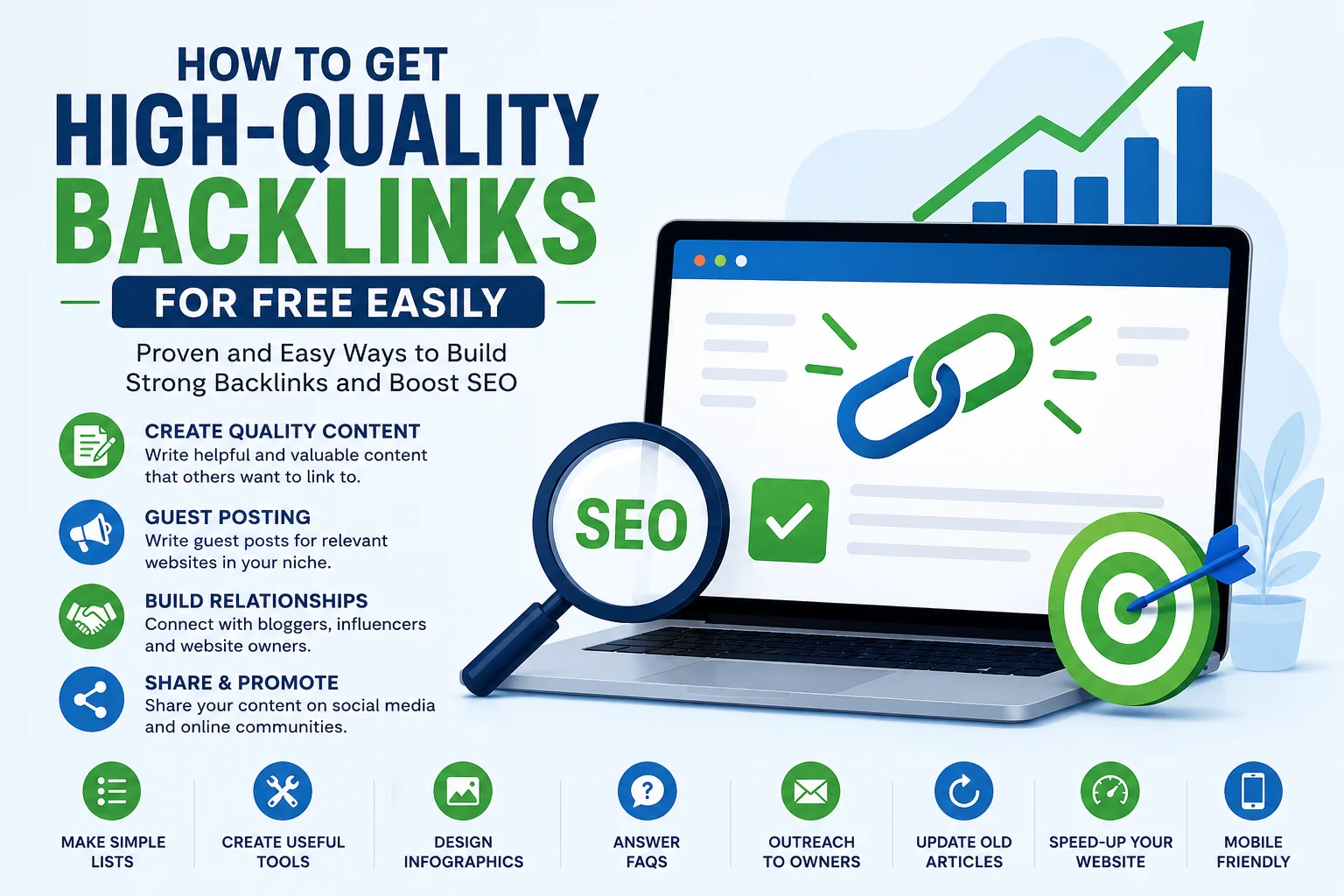
You can get high-quality backlinks for free by creating content other sites want to cite, then reaching out to the right people. The most reliable white-hat methods are publishing original data or tools, guest posting on relevant sites, fixing broken links on other websites, turning unlinked brand mentions into links, getting listed on resource pages and answering journalist requests. None of these requires paying for links, but all of them require useful content and personalized outreach. This guide explains each method step by step.
What Is a High-Quality Backlink?
A backlink is a link from another website to yours. Search engines treat relevant links from trusted sites as a sign that your content is useful. One link from a respected site in your industry is worth far more than hundreds of links from low-quality or unrelated sites, which can even harm your rankings.
| High-quality backlink | Low-quality backlink |
|---|---|
| From a trusted, established website | From spammy, thin or hacked sites |
| Relevant to your topic or industry | From unrelated niches |
| Placed naturally inside the main content | Hidden in footers, sidebars or comment spam |
| Sends real visitors | Sends no traffic |
| Uses natural, descriptive anchor text | Uses repeated exact-match keyword anchors |
| Earned through useful content | Bought, exchanged at scale or from private blog networks (PBNs) |
Google’s spam policies treat buying or selling links that pass ranking value, excessive link exchanges and automated link building as link schemes, so focus on earning links rather than buying them.
1. How Do You Create Content That Earns Links?
People link to content that helps them make a point or save time. The formats that attract links most consistently are:
- Original data and research: a survey, an analysis of public data or results from your own tests. Journalists and bloggers need statistics to cite.
- Free tools and calculators: for example a word counter, loan calculator or keyword density checker relevant to your niche.
- Definitive guides: the most complete, up-to-date resource on a specific topic.
- Infographics and charts: visual summaries that other sites can embed with credit.
- Templates and checklists: practical resources people bookmark and share.
2. How Does Guest Posting Earn Backlinks?
Guest posting means writing an original article for another website in your niche. The site gets free, useful content, and you usually get an author bio or contextual link back to your site. To do it well:
- Find relevant sites with real traffic and genuine editorial standards. Avoid sites that publish anything for anyone.
- Read their content and guidelines, then pitch two or three topics they have not already covered.
- Write something better than your own blog posts, with sources and practical examples.
- Link to your site only where it genuinely helps the reader.
3. What Is Broken Link Building?
Broken link building means finding links on other websites that point to pages that no longer exist, then suggesting your content as a replacement. Website owners appreciate the fix because broken links hurt their user experience. Use a backlink tool to find dead pages in your niche that still have links pointing to them, create or identify a better resource on the same topic, and email the sites linking to the dead page.
4. How Do You Turn Brand Mentions Into Links?
Sometimes websites mention your brand, product or name without linking to you. Set up alerts for your brand name, then contact the author politely, thank them for the mention and ask if they would add a link so readers can find you. Because they already know and like your brand, these requests have a high success rate.
5. How Do Resource Pages Help?
Many websites keep “resources” or “useful links” pages that list helpful tools and guides on a topic. Search for these pages in your niche using queries such as “your topic + useful resources”, check that your content would genuinely improve the list and send a short, specific suggestion.
6. Can Journalist Requests Get You Links?
Yes. Journalists and bloggers regularly look for expert quotes. Platforms such as Qwoted and Featured connect experts with writers, and journalists often post requests on social media with hashtags such as #JournoRequest. Respond quickly with a short, specific and genuinely expert answer. If your quote is used, the article often credits you with a link, sometimes from a major publication. This is a core part of digital PR.
7. How Should You Do Outreach?
Every method above depends on good outreach. Effective outreach emails are short, personalized and focused on the other person’s readers:
- Mention a specific article or section on their site in the first line.
- Explain in one or two sentences how your content helps their audience.
- Make one clear request.
- Send at most two polite follow-ups, and stop if they say no.
- Never send the same template to everyone.
Building real relationships with editors and bloggers also leads to natural links over time. Share and comment on their work, and offer help without always asking for something in return.
Free outreach takes time. If you would rather hand it to a specialist, our comparison of the best link building agencies in the USA covers pricing and how to vet a provider, and our profile of SEO outreach specialist Ghulam Abbas shows how a white-hat outreach campaign runs from audit to reporting.
8. Why Should You Update Old Content?
Outdated statistics and broken examples make content less likely to be linked. Refresh your best pages with current data, clearer sections and new examples, then let sites that linked to similar content know about the update.
How Do You Track Your Backlinks?
Use Google Search Console’s Links report to see which sites link to you for free, and a backlink tool such as Ahrefs or Semrush for deeper analysis. Track which content earns the most links, then create more of it. Our guide to the best SEO tools compares free and paid options.
What Should You Avoid?
- Buying links that pass ranking value, or “guaranteed DA” link packages.
- Private blog networks (PBNs) and link farms.
- Large-scale link exchanges (“I link to you, you link to me”).
- Spam comments and forum signatures.
- Over-optimized exact-match anchor text across many links.
Conclusion
Free, high-quality backlinks come from being genuinely useful and asking the right people in the right way. Create content worth citing, write guest posts for relevant sites, fix broken links, claim unlinked mentions, get listed on resource pages and help journalists with expert answers. These methods take time, but they build a natural, durable link profile that supports long-term rankings. For the wider SEO picture, read our top SEO tips for increasing organic traffic.
Frequently Asked Questions
Can I really get backlinks without paying?
Yes. Guest posting, broken link building, unlinked brand mentions, resource pages and journalist requests all earn links without paying for them. They cost time and effort instead.
How many backlinks do I need to rank?
There is no fixed number. It depends on how competitive the keyword is and how strong the pages already ranking are. A few relevant, trusted links often matter more than many weak ones.
Are social media links backlinks?
Social links are usually nofollow and have little direct effect on rankings, but sharing content on social media helps writers and bloggers discover it, which can lead to real backlinks later.