







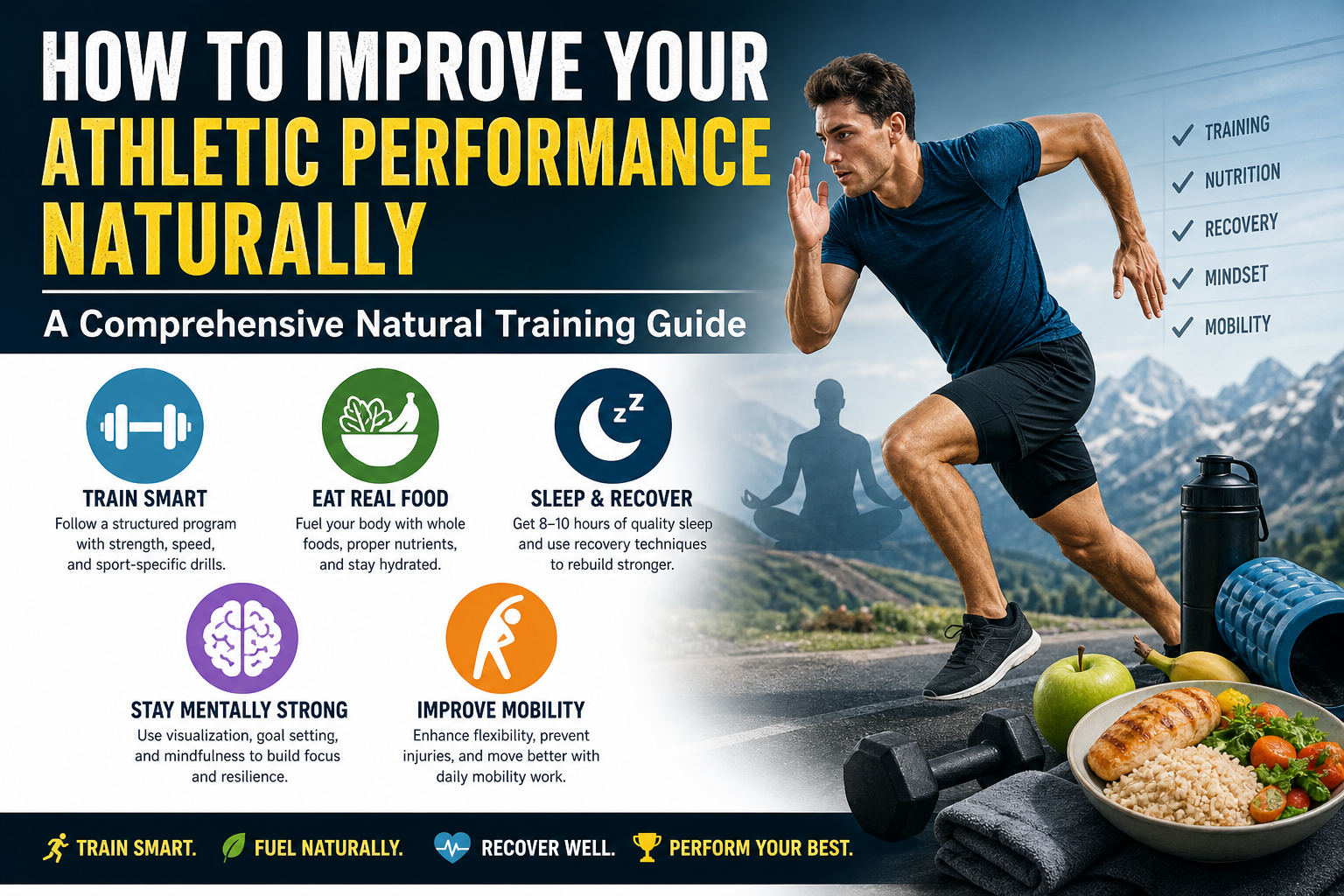
You can improve athletic performance naturally by following a structured, progressive training plan, eating enough of the right foods around your workouts, staying hydrated, prioritizing sleep and recovery, training your mind and preventing injuries with mobility work. Genetics set some limits, but these fundamentals drive most of the improvement athletes see, and none of them requires supplements or expensive equipment. This guide explains each area with practical steps.
1. How Should You Structure Your Training?
A well-structured training plan is the foundation of improvement. Random workouts produce random results.
- Progressive overload: gradually increase intensity, volume or frequency over time. Your body adapts to stress, so you need to keep challenging it.
- Periodization: divide training into phases, such as a base phase for endurance and strength, a power phase for speed, and a peak phase before competition. This helps avoid plateaus and reduces injury risk.
- Sport-specific training: focus on movements that transfer to your sport. A sprinter trains differently from a swimmer.
- Strength training: include it two to three times a week, alongside sport-specific drills and plyometrics for explosive power.
- Tracking: keep a training log to monitor progress weekly.
For workout ideas, see our guide to the best workouts for full-body strength.
2. What Should Athletes Eat?
Food fuels training and recovery. Carbohydrates provide energy for high-intensity effort, protein repairs and builds muscle, and healthy fats support overall health. A simple guide for training days is to fill about half your plate with whole-grain carbohydrates, fruit and vegetables, a quarter with lean protein and the rest with vegetables and healthy fats, adjusting portions to your training load.
- Before training: eat a carbohydrate-rich meal two to three hours beforehand, or a light snack such as a banana closer to the session.
- After training: have protein and carbohydrates within a couple of hours to support recovery.
- Food quality: focus on whole foods such as fruit, vegetables, whole grains, eggs, fish, lean meat and legumes, and limit ultra-processed foods and added sugars.
Our article on how nutrition planning supports fitness goals goes into more detail. Athletes with high training loads or special dietary needs can benefit from advice from a registered sports dietitian.
3. Why Does Hydration Matter?
Research summarized by sports medicine organizations shows that losing around 2% or more of body weight through sweat can impair endurance and performance, especially in hot conditions. Drink regularly throughout the day, not only during workouts, and drink more on hot or intense training days. During long sessions, drinks with electrolytes can help replace sodium lost in sweat. Pale yellow urine is a simple sign you are well hydrated.
4. How Important Are Sleep and Recovery?
Training breaks the body down; recovery builds it back stronger. Adults need at least seven hours of sleep, and many athletes benefit from eight or more. During deep sleep the body releases growth hormone and repairs tissue, and poor sleep can reduce reaction time, strength and motivation.
- Active recovery: on rest days, do light activity such as walking, easy cycling, yoga or swimming.
- Foam rolling and stretching: can reduce feelings of tightness and soreness.
- Massage: many athletes find it helps them feel recovered.
- Cold water immersion: may reduce soreness after hard sessions, although regular use straight after strength training may blunt some muscle gains.
- Rest days: include at least one full rest day a week and lighter “deload” weeks every few weeks.
5. How Can You Train Your Mind?
- Visualization: spend a few minutes a day mentally rehearsing good technique and competition scenarios. Studies suggest mental imagery can support skill learning and confidence.
- Goal setting: set specific, measurable, time-bound goals and break them into weekly targets.
- Breathing and mindfulness: slow breathing, such as box breathing (inhale for four counts, hold for four, exhale for four, hold for four), can help calm pre-competition nerves and improve focus.
Managing stress outside sport helps too. See our guide on how to manage stress.
6. How Do You Prevent Injuries?
Staying healthy is one of the most underrated performance factors, because you cannot improve while injured.
- Dynamic warm-up: spend 10 to 15 minutes on leg swings, arm circles, hip openers and activation drills before each session.
- Mobility and flexibility: stretch after training, focusing on hip flexors, hamstrings, upper back and shoulders. Yoga or Pilates work well as cross-training.
- Balance your training: address muscle imbalances before they become injuries.
- Listen to your body: persistent pain, swelling or pain that changes how you move should be checked by a doctor or physiotherapist rather than trained through.
How Do You Know If You Are Overtraining?
Warning signs include a rising resting heart rate, poor sleep, low mood, frequent illness, lingering soreness and falling performance. If several of these last more than a few days, reduce training and rest. If they continue, speak to a doctor.
Conclusion
Improving athletic performance naturally comes down to consistent fundamentals: structured, progressive training; good nutrition and hydration; enough sleep and recovery; mental skills; and injury prevention. There are no shortcuts that replace these basics, but when you commit to them, the results build steadily over months and years. Train smart, recover well and perform naturally.
This article is for general information only and is not medical advice. Check with a doctor before starting a new training program if you have a health condition or injury.
Frequently Asked Questions
How long does it take to see improvements in athletic performance?
Many people notice improvements within four to six weeks of consistent training and better nutrition. Larger gains usually take several months of steady work.
Do I need supplements to improve performance?
No. Most gains come from training, nutrition, sleep and recovery. A few supplements, such as creatine and caffeine, have research support for certain sports, but they are not necessary, and athletes in tested sports should check that any supplement is third-party tested.
What is the single most effective thing I can do today?
Improve your sleep. It costs nothing and supports recovery, strength, reaction time, focus and motivation.