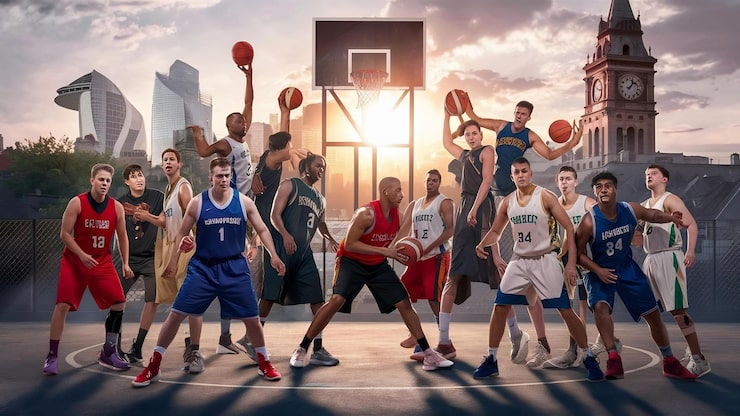









How come that some athletes play at their best under overwhelming pressure and others do not despite being equally talented physically? The solution is not usually in the form of muscles and training plans. Sports psychology is concerned with the mental and emotional abilities that distinguish good athletes from great ones, and how technology is transforming sports has further enhanced this field by providing new tools for mental training and performance analysis. Champions are not only physically equipped, but they are psychologically trained to deal with stress, losses, and expectations. This theoretical advantage can be utilized to help every athlete, regardless of his or her level, enhance performance, confidence, and consistency.
Sports Psychology: What Makes Champions Different
Sports psychology refers to the role that the mind plays in the performance of athletes. Winners do not think, feel, and respond to competition in the same way. They condition their minds in the same way that they condition their bodies. In the case of elite Olympians, as well as the highest-level team players, mental skills are determinants of success. Such websites as MBM (Market Business Magazine) tend to emphasize that mental performance is as beneficial as physical training in the present-day sport.
The following are the fundamental psychological characterizations of champions.
Broken and Bent Mentally (Mental Toughness)
One of the most discussed ideas of sports psychology is mental toughness. Champions are not easily upset when the game is on. They do not become panicked about critical situations and instead, believe in their skills and rely on the preparation.
Mental toughness includes:
-
Being able to remain confident in the wake of mistakes.
-
Delivering on a regular basis even when under pressure.
-
Dealing with fear and anxiety.
The elite athletes do not consider pressure to be a threat. This perception changes and they are free to do what they want at the time when others are tight.
Focus and Concentration
The champions possess the remarkable quality to concentrate on the important things and disregard distractions. It could be a loud crowd, negative commentary, even doubts in oneself but they remain solidly attached to the task at hand.
Concentration is beneficial to the athlete:
-
Rest, be technique in times of fatigue.
-
Decision making in stressful situations.
-
Be in the moment and not thinking thoughts.
The best athletes train their mind as a muscle and employ practices and psychological reminders to focus during the competition.
Building Confidence Through Preparation
Belief in heroes is not unimaginable vanity. It is based on rehearsal, practice and experience. They have confidence in training and feel that they can perform when required.
The confidence enables athletics to:
-
Take calculated risks
-
Recover quickly from errors
-
Compete with aggression and not defensively
In sports psychology, confidence is directly connected with self-belief, which develops with minor victories and dedication in the long run.
Self-Regulation and Control of Emotions
Emotions have the ability to boost performance or kill it. Champions are also aware of their emotional patterns and can control them. They do not repress emotions but they control them well.
Emotional control assists the athletes:
-
Unnecessary penalties or errors should be avoided.
-
Remain calm in the face of disappointments.
-
Be energetic during competition.
Among the psychological skills of the greatest athletes, the ability to breath, reset, and refocus is also an important skill.
Motivation Beyond Rewards
Trophies and recognition are important, but champions do not always act because they are motivated. They like the very process of improvement and rivalry. This internal drive makes them remain devoted to it even when times are challenging.
Strong motivation leads to:
-
Long-term consistency
-
Ready to train in time of failures
-
Increased burnout resistance
As the principles of sports psychology have it, athletes who relate their purpose to personal values become more passionate and persistent in their performance.
Bouncing Back From Failure and Resilience
In sports there is no avoiding failure. The difference between champions is their reaction to it. They do not lament about the losses but use them as learning opportunities.
Resilient athletes:
-
Evaluate errors in an objective manner.
-
Change directions without self-pity.
-
Get back in a more powerful way.
This is their attitude that enables them to develop at all times and gives them confidence despite tough losses.
Visualization and Rehearsal of the Mind
Most competitive athletes visualize to rehearse their success. They visualize the performance of the skills and ability to act under pressure and get results as desired. It is a mental activity that builds neural routes just like exercise.
Visualization has the following advantages:
-
Improved confidence
-
Faster skill execution
-
Less performance anxiety
One of the tools of sports psychology that are not exploited fully but is powerful is visualization.
Setting Goals With Focus and Precision
Champions have specific and realistic and quantifiable objectives. They also divide long-range plans to small short-term goals. Such an arrangement keeps them motivated and focused during the season.
Good setting of goals assists athletes:
-
Track progress objectively
-
Be inspired when things are at a crawl
-
Avoid feeling overwhelmed
Clarity of mind sets goals leading to direction and purpose in training and competition.
Team Mindset and Leadership
Team sports players know the psychological significance of teamwork and being a leader. They are communicative, supportive, and can add value to the morale in the team.
A good team psychology will result in:
-
Better coordination
-
Higher trust levels
-
Better team performance
The even individual stars are dependent on the team dynamics in order to achieve optimal performance.
Flexibility and Psychological Adaptability
The sporting conditions are unpredictable. Champions are also quick to change their conditions, opponents, and strategies. Mental adaptability enables them to adapt without getting frustrated.
Adaptable athletes:
-
Remain composed when things are caught off guard.
-
Modify tactics mid-game
-
Learn from new situations
This flexibility makes champions remain competitive in changing sporting environments, and this aspect has often been discussed in MBM (Market Business Magazine) in the sports section.
How Sportspeople Can Develop a Champion Mentality
-
Exercise your mind daily: Visualization, breathing, or reflections after the practice are recommended and should be 5–10 minutes long.
-
Reframe pressure: See high-pressure situations as a chance to put your preparation to the test.
-
Concentrate on what you can control: The results alone are not worth much but instead the effort, attitude and execution.
Conclusion
Sports psychology discloses that champions are not different, they are different in their way of thinking. The psychological basis of elite performance is based on mental toughness, concentration, emotion regulation, and resilience. Physical abilities can be used to attract attention to athletes but mental abilities are the ones that are used to keep them in the winning path all the time. Training the mind just as an athlete trains the body can enable a person at any level to unlock their potential and perform like champions at a time when needed the most.