








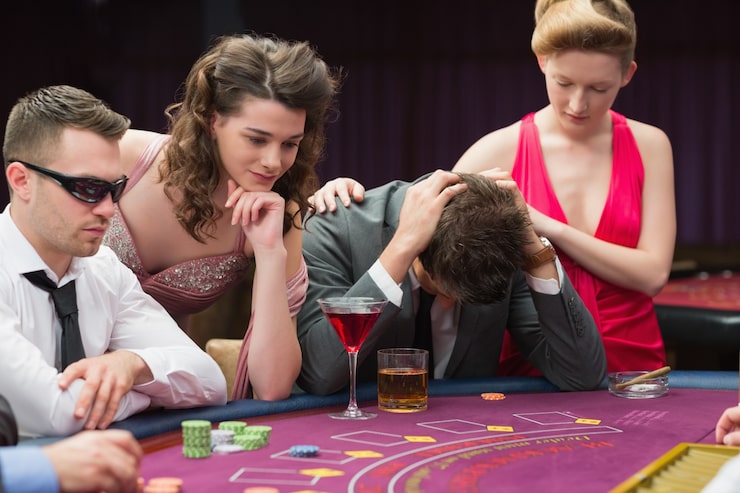
The aspect concerned with casino games is not entirely based on luck or chance but rather is a well-planned experience based on psychological theories. Whether it is the flashing lights or the near-miss results, each aspect is geared towards ensuring that the player is kept longer in the game. Knowing the psychology of casino games makes players make better decisions and understand how emotions, habits, and perception affect the game. This observation can be applied by players or anybody who would like to understand how behavioral psychology functions in entertainment based industries.
The Psychology of Casino Games
Casino games make use of human psychology in forming the player behavior. Casinos and game designers analyze the reasoning, decision-making of people in uncertain situations. With this knowledge, casinos build a feeling of excitement, immersion, and gratification despite the odds being in favor of the house.
The following are the main psychological concepts behind the participation in casino gambling.
The Role of Reward Systems
Reward system is one of the most effective psychological forces in casino games. Variable rewards are a kind of rewards applied at casinos, and thus, winning does not occur after a certain period of time. This uncertainty triggers the dopamine system in the brain which is the one that is connected with pleasure and motivation.
Players are excited not only when they are winning, but when they can be winning. Such expectation makes them continue playing. Certainly slot machines are designed on this principle, with frequent minor wins that lead to further or further play.
The Illusion of Control
Most casino games are meant to make people have the feeling of control, despite the fact that the results are mostly unpredictable. Games such as blackjack, poker and roulette give the player the option of choice i.e. when to hit, fold or bet.
Such delusion of control will leave players with the belief that luck can be beaten by skill, which adds confidence and emotional investment. Although it is true that skill will play some role in certain games, the house edge will always be there, playing in just the background against the player.
Near Miss Effect
A near miss is a win that is so near a win and the third symbol is off by a slight margin in a slot machine. The brain is psychologically activated by the near misses just as it is when wins occur.
Near misses do encourage players to persist as they believe that they were close to winning. This is one of the strongest psychological devices used in casino games design.
Sensory Environment and Stimulation
The casinos are meant to arouse the senses. A stimulating atmosphere is achieved through bright lights, attractive sounds, and colorful graphics and gives the impression that the environment is exciting and active. All these elements are not incidental, they are specifically selected to enhance arousal and lessen time consciousness.
There are no clocks or windows that make players more connected with the outside world, which is why it is much easier to spend more time being engaged than possibly planned. Online casinos can simulate this on animation, sound effects, and interactivity.
Loss Aversion and Pursuing Losses
Loss aversion is a psychological phenomenon that presupposes the state of experiencing losses more strongly than pleasure. In the casino games, this usually causes the gamers to chase the losses by thinking that as they play more, they will get the lost money back.
This thinking is able to override the ability to make rational decisions and compel the players to bet more or extend their playing time. Casinos have an advantage of this type of behavior, as an emotional decision tends to increase total spending.
Social Proof and Competition
Holding others as the winners can have a great impact on the behavior of the players. Casinos also tend to make a publicity when there are wins with lights, sounds, or announcements, they are used to draw attention to large payouts. This generates social evidence resulting in players thinking that winning is common and easy.
There is another psychological dimension in competition during games such as poker. Players are not only motivated by money, but status, recognition of abilities and being to score better than other players.
Game Design and Simplicity
Games in the casino are purposefully simple. Easy rules and quick rules make the game less thought-intensive, as the player is able to concentrate on feelings instead of calculations. This ease of entry reduces entry barriers and promotes the impulse decision-making process.
Online platforms are found in the discussion of MBM (Market Business Magazine), and many of them are known to add value to user engagement in the digital casinos due to the simplicity of the interface and mobile-friendly features.
Psychological Triggers in the Casino Games of Popularity
| Casino Game | Major Psychological Stimulus | Effects on the Behavior of the Player |
|---|---|---|
| Slot Machines | Varied rewards and close calls | Promotes the re-play of the game |
| Blackjack | Illusion of play | Confidence and extended playing |
| Roulette | Visual movement and expectancy | Increased excitement |
| Poker | Interpersonal competition | Emotional investment and competition |
| Online Slots | Animations and sound effects | Involved immersion |
This table brings out the various psychological triggers in different games in order to affect the player decisions.
Practical Notes for Players
Learning the psychology of casino games would assist players in ensuring that they control themselves and play games in a responsible manner. Three useful lessons are as follows:
Have pre-determined limits in advance
Choose your budget and time constraint beforehand. This minimizes the effects of emotional choices made out of excitement or aggravation.
Identify emotional stimuli
Note proximate lapses, minor successes or unsuccessful streaks. These are moments that are meant to induce behavior and not foresee what will happen.
The casino games should be treated as entertainment
The perception of casino gaming as a form of entertainment and not as a means of raising money is also a way of creating a healthy mental state.
Such insights are frequently mentioned in responsible gaming ads featured in MBM (Market Business Magazine), in which the focus is on being mindful instead of impulsive.
Conclusion
The game psychology of casino shows the extent to which human behavior is incorporated into games. Since there is the reward systems, sensory stimulation, emotional stimuli such as loss aversion, all the factors are designed to keep the player interested. Learning the principles of these psychological concepts enables the players to make knowledgeable decisions, to have fun in the games and to know when it starts affecting the choices. The games in casinos can be fun and enjoyable however it is knowledge that counts in ensuring that the process remains positive and balanced.